


The One & Only PS3 Thread
 06-09-05 | 03:09 PM
#51
Thread Starter
Banned
Joined: Jan 2002
Posts: 6,677
Likes: 0
Received 0 Likes
on
0 Posts
From: Blu-Ray: We Don't Need No Stinkin' Petition
Linux and possibly no HDD?
http://www.gamespot.com/news/2005/06...s_6127219.html
Edit: I would just like to voice that I think no having a hard drive is going to be a huge mistake. If Sony doesn't support it out of the box, it will fail to catch on much like PS2 HDD did. With no developers (outside of Sony) working on HDD support, Kutaragi's idea of a network drive will never surface. He needs to worry about technology available today, and integrate new technology as it comes along. I have much hate for this interview.
Since E3, Sony Computer Entertainment president Ken Kutaragi has been calling the PlayStation 3 an "entertainment supercomputer" rather than a gaming console. Now, he's revealed a new plan to make sure that it's acknowledged as one.
In an interview with Impress PC Watch, Kutaragi disclosed that he plans to install the Linux operating system on the PS3's hard disc drive (HDD) so it will be recognized as a computer, rather than a mere console.
But while Linux would require a hard drive to run on, Kutaragi told Impress PC Watch, "We're not going to equip [the PS3 with] a HDD by default, because no matter how much [capacity] we put in it, it won't be enough." It was unclear whether he was referring to the previously known fact that the PS3 would not have an internal hard drive or whether he was indicating that the device would not come with the external 2.5-inch detachable HDD outlined in the specs revealed at E3.
If the latter is the case, then hard drives will be optional--and will cost extra. Kutaragi seemed to confirm this when he said, "There are still some issues if the machine doesn't come with an HDD." Further comments seemed to indicate that there will be more than one model of optional add-on PS3 HDDs available at launch. "We've added a 2.5-inch HDD bay so that users can equip HDDs, such as 80GB and 120GB, even though that's still not enough [capacity]." By contrast, the Xbox 360 will ship with a 20GB hard drive, standard. No other 360 HDD models have been announced, although Microsoft officials have indicated larger-capacity models could be produced if needed.
A complete translation of Kutaragi's interview with Impress PC Watch is below:
Impress PC Watch: The PlayStation 3 has some extremely high specifications, but it doesn't come with an HDD. Why?
Ken Kutaragi: We're not going to equip [the PS3 with] an HDD by default, because no matter how much [capacity] we put in it, it won't be enough. The next step is definitely network drives. With the Cell server, they can be accessed from anywhere, via network. Whether it's your own house [or] your friend's house, you can access the [network hard drive] anywhere. That's the kind of world we're imagining. But there are still some issues if the machine doesn't come with an HDD. So this time, we've added a 2.5-inch HDD bay so that users can equip HDDs, such as 80GB and 120GB, even though that's still not enough [capacity]. Although a network drive would allow for terabytes of storage, there's still the necessity to run an operating system offline. A hard drive for running an OS will be required for [the PS3] to be recognized as a computer.
IPCW: Do you mean to say that you'll run an OS on the PS3 to use it as a computer?
KK: I believe its wrong that, while we've been calling PlayStations "computers," Nintendo, which is in our same business, keeps telling the world their consoles are "toys." So even though we're making something that has the capability to be recognized as a supercomputer and requires paperwork when exporting or importing, the government sees it as a "toy." The PlayStation 2 has something as great as the Emotion Engine, and it can even run Linux, but it's still considered a gaming machine. I thought that the situation would become better since Microsoft appeared [in the gaming industry] from the IT field. But they won't say it either, since they want to protect their business. They see problems if the Xbox could run Windows, so they keep calling the Xbox a "game machine." It is really a pain in the neck. This time, we're positioning the PS3 as a "supercomputer." But people won't recognize it as a computer unless we call it a computer, so we're going to run an OS on it. In fact, the Cell can run multiple OSes. In order to run the OSes, we need an HDD. So in order to declare that the PS3 is a computer, I think we'll have [the PS3's HDD] preinstalled with Linux as a bonus.
IPCW: So Linux can be run on the Cell?
KK: Linux is legacy, but it will be a start. In the case of the Cell, operation systems are applications. The kernel will be running on the Cell, and multiple OSes will be running on top of that as applications. Of course, the PS3 can run Linux. If Linux can run, so can Lindows. Other PC Operating Systems can run too, such as Windows and Tiger (Max OS X 10.4), if the publishers want [them] to do so. Maybe a new OS might come out.
IPCW: Does that mean that we can expect applications that take advantage of the Cell, aside from games?
KK: As an example, HD video-editing software is basically the same as the nonlinear editing system used in broadcasting stations. What we're trying to do on the PS3 is that level of software. Nonlinear editing systems are incredible, but if it was done on the Cell, it would be even more incredible... The difference will be obvious. I think other PC applications, like photo-retouching software, will also be able to be done on the PS3. The user interface will also get interesting. In the case of the PC, users will have to wait for years between XP's UI to Longhorn's. But the PS3's UI will evolve much faster. For example, if we had an interface where we could control applications using gestures and words using the EyeToy, it would be like Minority Report. Of course, that kind of an evolution will also reflect on games. This will be the first form that [the Cell] will be spread. It can connect a keyboard, and it has all the necessary interfaces. It can run media, and it can run on a network. It's got such an all-around purpose, and it's open. It will become completely open if we equip it with Linux, and programmers will be able to do anything with it. It's the same thing with the graphics, since it's got the shaders.
In an interview with Impress PC Watch, Kutaragi disclosed that he plans to install the Linux operating system on the PS3's hard disc drive (HDD) so it will be recognized as a computer, rather than a mere console.
But while Linux would require a hard drive to run on, Kutaragi told Impress PC Watch, "We're not going to equip [the PS3 with] a HDD by default, because no matter how much [capacity] we put in it, it won't be enough." It was unclear whether he was referring to the previously known fact that the PS3 would not have an internal hard drive or whether he was indicating that the device would not come with the external 2.5-inch detachable HDD outlined in the specs revealed at E3.
If the latter is the case, then hard drives will be optional--and will cost extra. Kutaragi seemed to confirm this when he said, "There are still some issues if the machine doesn't come with an HDD." Further comments seemed to indicate that there will be more than one model of optional add-on PS3 HDDs available at launch. "We've added a 2.5-inch HDD bay so that users can equip HDDs, such as 80GB and 120GB, even though that's still not enough [capacity]." By contrast, the Xbox 360 will ship with a 20GB hard drive, standard. No other 360 HDD models have been announced, although Microsoft officials have indicated larger-capacity models could be produced if needed.
A complete translation of Kutaragi's interview with Impress PC Watch is below:
Impress PC Watch: The PlayStation 3 has some extremely high specifications, but it doesn't come with an HDD. Why?
Ken Kutaragi: We're not going to equip [the PS3 with] an HDD by default, because no matter how much [capacity] we put in it, it won't be enough. The next step is definitely network drives. With the Cell server, they can be accessed from anywhere, via network. Whether it's your own house [or] your friend's house, you can access the [network hard drive] anywhere. That's the kind of world we're imagining. But there are still some issues if the machine doesn't come with an HDD. So this time, we've added a 2.5-inch HDD bay so that users can equip HDDs, such as 80GB and 120GB, even though that's still not enough [capacity]. Although a network drive would allow for terabytes of storage, there's still the necessity to run an operating system offline. A hard drive for running an OS will be required for [the PS3] to be recognized as a computer.
IPCW: Do you mean to say that you'll run an OS on the PS3 to use it as a computer?
KK: I believe its wrong that, while we've been calling PlayStations "computers," Nintendo, which is in our same business, keeps telling the world their consoles are "toys." So even though we're making something that has the capability to be recognized as a supercomputer and requires paperwork when exporting or importing, the government sees it as a "toy." The PlayStation 2 has something as great as the Emotion Engine, and it can even run Linux, but it's still considered a gaming machine. I thought that the situation would become better since Microsoft appeared [in the gaming industry] from the IT field. But they won't say it either, since they want to protect their business. They see problems if the Xbox could run Windows, so they keep calling the Xbox a "game machine." It is really a pain in the neck. This time, we're positioning the PS3 as a "supercomputer." But people won't recognize it as a computer unless we call it a computer, so we're going to run an OS on it. In fact, the Cell can run multiple OSes. In order to run the OSes, we need an HDD. So in order to declare that the PS3 is a computer, I think we'll have [the PS3's HDD] preinstalled with Linux as a bonus.
IPCW: So Linux can be run on the Cell?
KK: Linux is legacy, but it will be a start. In the case of the Cell, operation systems are applications. The kernel will be running on the Cell, and multiple OSes will be running on top of that as applications. Of course, the PS3 can run Linux. If Linux can run, so can Lindows. Other PC Operating Systems can run too, such as Windows and Tiger (Max OS X 10.4), if the publishers want [them] to do so. Maybe a new OS might come out.
IPCW: Does that mean that we can expect applications that take advantage of the Cell, aside from games?
KK: As an example, HD video-editing software is basically the same as the nonlinear editing system used in broadcasting stations. What we're trying to do on the PS3 is that level of software. Nonlinear editing systems are incredible, but if it was done on the Cell, it would be even more incredible... The difference will be obvious. I think other PC applications, like photo-retouching software, will also be able to be done on the PS3. The user interface will also get interesting. In the case of the PC, users will have to wait for years between XP's UI to Longhorn's. But the PS3's UI will evolve much faster. For example, if we had an interface where we could control applications using gestures and words using the EyeToy, it would be like Minority Report. Of course, that kind of an evolution will also reflect on games. This will be the first form that [the Cell] will be spread. It can connect a keyboard, and it has all the necessary interfaces. It can run media, and it can run on a network. It's got such an all-around purpose, and it's open. It will become completely open if we equip it with Linux, and programmers will be able to do anything with it. It's the same thing with the graphics, since it's got the shaders.
Edit: I would just like to voice that I think no having a hard drive is going to be a huge mistake. If Sony doesn't support it out of the box, it will fail to catch on much like PS2 HDD did. With no developers (outside of Sony) working on HDD support, Kutaragi's idea of a network drive will never surface. He needs to worry about technology available today, and integrate new technology as it comes along. I have much hate for this interview.
Last edited by joshd2012; 06-09-05 at 05:46 PM.
 06-09-05 | 04:49 PM
#52
Thread Starter
Banned
Joined: Jan 2002
Posts: 6,677
Likes: 0
Received 0 Likes
on
0 Posts
From: Blu-Ray: We Don't Need No Stinkin' Petition
100-200 Dev kits out there:
http://ps3.ign.com/articles/624/624137p1.html
In an interview with Jiji News Service, Sony Computer Entertainment's Ken Kutaragi disclosed that PS3 development kits have been shipped out in large numbers to developers in Europe, America and Asia. Kutaragi didn't give a specific number of development kits in circulation, referring to the number as being over 100 but under 200.
That's apparently not enough for the hungry game development community. Kutaragi also reveals that there's a shortage of kits, and Sony cannot keep up with demand.
That's apparently not enough for the hungry game development community. Kutaragi also reveals that there's a shortage of kits, and Sony cannot keep up with demand.
06-09-05 | 06:29 PM
#53
DVD Talk Gold Edition
Joined: Nov 1999
Posts: 2,493
Likes: 0
Received 0 Likes
on
0 Posts
From: Osaka, Japan
I agree with you Josh. And the comment about 120g not being enough is pretty stupid. Having a HD built in is not about storing someones entire mp3 and video collection or whatever, it's about providing core gaming and online functionality along with perhaps some level of performance enhancement. From this point of view the 20g in 360 is fine, and if they want to one up them then 120g would do just that.
06-09-05 | 07:19 PM
#54
DVD Talk Ultimate Edition
Joined: Jan 2000
Posts: 4,433
Likes: 0
Received 0 Likes
on
0 Posts
From: Los Angeles, CA
This part of the interview has me confused:
"We're not going to equip [the PS3 with] an HDD by default, because no matter how much [capacity] we put in it, it won't be enough."
"So this time, we've added a 2.5-inch HDD bay so that users can equip HDDs, such as 80GB and 120GB, even though that's still not enough [capacity]."
"Although a network drive would allow for terabytes of storage, there's still the necessity to run an operating system offline. A hard drive for running an OS will be required for [the PS3] to be recognized as a computer."
So, Kutaragi realizes that the PS3 requires a HDD but states that they will not equip it with one.
However, they have added the ability for users to add a 80 or 120GB HDD to the PS3 even though it's still not enough.
Please excuse me while I
Here's my favorite quote from the interview:
"If Linux can run, so can Lindows."
Engrish at its best.
"We're not going to equip [the PS3 with] an HDD by default, because no matter how much [capacity] we put in it, it won't be enough."
"So this time, we've added a 2.5-inch HDD bay so that users can equip HDDs, such as 80GB and 120GB, even though that's still not enough [capacity]."
"Although a network drive would allow for terabytes of storage, there's still the necessity to run an operating system offline. A hard drive for running an OS will be required for [the PS3] to be recognized as a computer."
So, Kutaragi realizes that the PS3 requires a HDD but states that they will not equip it with one.
However, they have added the ability for users to add a 80 or 120GB HDD to the PS3 even though it's still not enough.
Please excuse me while I
Here's my favorite quote from the interview:
"If Linux can run, so can Lindows."
Engrish at its best.
06-09-05 | 07:25 PM
#55
DVD Talk Hall of Fame
Originally Posted by Centurion
This part of the interview has me confused:
"We're not going to equip [the PS3 with] an HDD by default, because no matter how much [capacity] we put in it, it won't be enough."
"So this time, we've added a 2.5-inch HDD bay so that users can equip HDDs, such as 80GB and 120GB, even though that's still not enough [capacity]."
"Although a network drive would allow for terabytes of storage, there's still the necessity to run an operating system offline. A hard drive for running an OS will be required for [the PS3] to be recognized as a computer."
So, Kutaragi realizes that the PS3 requires a HDD but states that they will not equip it with one.
However, they have added the ability for users to add a 80 or 120GB HDD to the PS3 even though it's still not enough.
Please excuse me while I
Here's my favorite quote from the interview:
"If Linux can run, so can Lindows."
Engrish at its best.
"We're not going to equip [the PS3 with] an HDD by default, because no matter how much [capacity] we put in it, it won't be enough."
"So this time, we've added a 2.5-inch HDD bay so that users can equip HDDs, such as 80GB and 120GB, even though that's still not enough [capacity]."
"Although a network drive would allow for terabytes of storage, there's still the necessity to run an operating system offline. A hard drive for running an OS will be required for [the PS3] to be recognized as a computer."
So, Kutaragi realizes that the PS3 requires a HDD but states that they will not equip it with one.
However, they have added the ability for users to add a 80 or 120GB HDD to the PS3 even though it's still not enough.
Please excuse me while I
Here's my favorite quote from the interview:
"If Linux can run, so can Lindows."
Engrish at its best.
Second, Lindows
 06-09-05 | 08:24 PM
#56
DVD Talk Ultimate Edition
Joined: Jan 2000
Posts: 4,433
Likes: 0
Received 0 Likes
on
0 Posts
From: Los Angeles, CA
Originally Posted by flashburn
First off, he says 'it needs a hard drive to be recognized as a computer', not that it is required.
In an interview with Impress PC Watch, Kutaragi disclosed that he plans to install the Linux operating system on the PS3's hard disc drive (HDD) so it will be recognized as a computer, rather than a mere console.
 06-09-05 | 11:07 PM
#58

Mod Emeritus
Joined: Aug 1999
Posts: 15,325
Likes: 0
Received 0 Likes
on
0 Posts
Edit: I would just like to voice that I think no having a hard drive is going to be a huge mistake. If Sony doesn't support it out of the box, it will fail to catch on much like PS2 HDD did. With no developers (outside of Sony) working on HDD support, Kutaragi's idea of a network drive will never surface. He needs to worry about technology available today, and integrate new technology as it comes along. I have much hate for this interview.
But to me they can work around no HDD, and the wifi doesn't affect me much, but the no HD is the biggest omission, unfortunately. If it turns out to be true I will definitely be getting the 360 on launch, and most likely the PS3 on launch, and the Revo only once it hits the $150 price point.
06-10-05 | 01:11 AM
#59
DVD Talk Gold Edition
Joined: Nov 1999
Posts: 2,493
Likes: 0
Received 0 Likes
on
0 Posts
From: Osaka, Japan
I think no wi-fi out of the box (360) is less of an issue than no HD (ps3) because developers don't have to know or care where you are online via a cable or via wireless, it's completely insignificant. Also the cost of the adapter should be relatively minor hopefully (which admittedly begs the question of why not include it but anyway..). However, for games to take advantage of HD features they need to rely on a 100% install rate otherwise these features are just not going to happen.
06-10-05 | 08:18 AM
#60
DVD Talk Ultimate Edition
Joined: Jan 2000
Posts: 4,433
Likes: 0
Received 0 Likes
on
0 Posts
From: Los Angeles, CA
Originally Posted by Chris_D
I think no wi-fi out of the box (360) is less of an issue than no HD (ps3) because developers don't have to know or care where you are online via a cable or via wireless, it's completely insignificant. Also the cost of the adapter should be relatively minor hopefully (which admittedly begs the question of why not include it but anyway..). However, for games to take advantage of HD features they need to rely on a 100% install rate otherwise these features are just not going to happen.
Also, isn't the PS3 suppose to be the center of your entertainment system? I mean, isn't Sony trying to pitch this as the all-inclusive unit that should tie-in all your entertainment/computer needs into one system? How will they do that without a HD?
06-10-05 | 08:26 AM
#61
Thread Starter
Banned
Joined: Jan 2002
Posts: 6,677
Likes: 0
Received 0 Likes
on
0 Posts
From: Blu-Ray: We Don't Need No Stinkin' Petition
The main issue is this: Kutaragi wants it so each PS3 connects to a network drive instead of a local hard drive. This conforms with the idea of Cells connecting together - the PS3 would have a Cell and so would the server holding the network drive. This way, you could have access to tetrabytes of storage from your PS3. In this senario, there is no need for local storage.
Unfortunately for Kutaragi, technology isn't quite there yet (who are we kidding, it won't be like this in 5 years even). He is thinking way too far into the future. He needs to realize that hard drives are accessable and inexpensive NOW and they need to incorporate one with the system if he ever wants his 'network drive' dream to be realized.
Even a day later, I'm still angry about this. Bad thoughts of purchasing a 360 are running through my head.
Unfortunately for Kutaragi, technology isn't quite there yet (who are we kidding, it won't be like this in 5 years even). He is thinking way too far into the future. He needs to realize that hard drives are accessable and inexpensive NOW and they need to incorporate one with the system if he ever wants his 'network drive' dream to be realized.
Even a day later, I'm still angry about this. Bad thoughts of purchasing a 360 are running through my head.
06-10-05 | 08:45 AM
#62
DVD Talk Ultimate Edition
Joined: Jan 2000
Posts: 4,433
Likes: 0
Received 0 Likes
on
0 Posts
From: Los Angeles, CA
Originally Posted by joshd2012
Even a day later, I'm still angry about this. Bad thoughts of purchasing a 360 are running through my head.

I agree, they are definitely doing the right thing in thinking ahead, but that time has yet to come. You have to remember, that's what these guys do for PR. I still have a gut feeling the PS3 will get a HD, but gut feelings don't do anyone any good. You can be sure, however, that the HD will be larger than 20GB.
C'mon now, you know as well as I do that you will still have a PS3 sitting in your house.
 06-10-05 | 09:03 AM
#63
DVD Talk Platinum Edition
Joined: Feb 2001
Posts: 3,189
Likes: 0
Received 0 Likes
on
0 Posts
Originally Posted by joshd2012
The main issue is this: Kutaragi wants it so each PS3 connects to a network drive instead of a local hard drive. This conforms with the idea of Cells connecting together - the PS3 would have a Cell and so would the server holding the network drive. This way, you could have access to tetrabytes of storage from your PS3. In this senario, there is no need for local storage.
Unfortunately for Kutaragi, technology isn't quite there yet (who are we kidding, it won't be like this in 5 years even). He is thinking way too far into the future. He needs to realize that hard drives are accessable and inexpensive NOW and they need to incorporate one with the system if he ever wants his 'network drive' dream to be realized.
Even a day later, I'm still angry about this. Bad thoughts of purchasing a 360 are running through my head.
Unfortunately for Kutaragi, technology isn't quite there yet (who are we kidding, it won't be like this in 5 years even). He is thinking way too far into the future. He needs to realize that hard drives are accessable and inexpensive NOW and they need to incorporate one with the system if he ever wants his 'network drive' dream to be realized.
Even a day later, I'm still angry about this. Bad thoughts of purchasing a 360 are running through my head.
The software boys in Redmond are still trying to get DRM to work locally, and failing pretty badly for that matter. Has Kutaragi ever addressed these issues with network drive rhetoric he has spoken? Obviously it would be "impossable" at this point in time to even suspect it could work from a legal standpoint.
I find this very interesting as Sony has always been the first in line to try and limit consumer freedom of media, I'm aware they have changed their tune on mp3's finally, but I find it hard to believe they have changed so drastically in so little time. Perhaps Sony is invisioning a world in which they run the these central servers? Then they could piece-charge for access to all data sharing?
I'm just trying to understand what Sony is attempting to accomplish, because what they say and what they do have two very different messages.
06-12-05 | 06:15 AM
#64
DVD Talk Special Edition
Joined: Jan 2002
Posts: 1,040
Likes: 0
Received 0 Likes
on
0 Posts
From: McKinney, TX
Originally Posted by Joshd2012
Even a day later, I'm still angry about this. Bad thoughts of purchasing a 360 are running through my head.
I own all the systems so I can play any game that interests me, and the console war matters not because I'm enjoying games.
06-12-05 | 09:45 AM
#65
DVD Talk Ultimate Edition
Joined: Jan 2000
Posts: 4,433
Likes: 0
Received 0 Likes
on
0 Posts
From: Los Angeles, CA
Originally Posted by tenaciousdave
Many people here own multiple consoles and think that it's a good thing.
I own all the systems so I can play any game that interests me, and the console war matters not because I'm enjoying games.
I own all the systems so I can play any game that interests me, and the console war matters not because I'm enjoying games.
06-12-05 | 09:55 AM
#66
Thread Starter
Banned
Joined: Jan 2002
Posts: 6,677
Likes: 0
Received 0 Likes
on
0 Posts
From: Blu-Ray: We Don't Need No Stinkin' Petition
Originally Posted by tenaciousdave
Many people here own multiple consoles and think that it's a good thing.
I own all the systems so I can play any game that interests me, and the console war matters not because I'm enjoying games.
I own all the systems so I can play any game that interests me, and the console war matters not because I'm enjoying games.
Sure, owning more than one console is the ideal situation, but it is not practical for me. I have to choose the system that suits my needs the best. Am I missing out on great games because I don't own an Xbox or GC? Of course, but I don't know if I would ever have to time to play it even if I did own it.
06-12-05 | 11:22 AM
#67
Retired
I'm in the exact same boat. I have all three consoles plus a DS this gen, but only get to play one or two days a week (excluding 5-10 minutes here and there with something like Warioware) and thus have a huge backlog.
Thus only 1 console for me next gen. Just doesn't make sense from a financial or time standpoint with my limited gaming time.
Thus only 1 console for me next gen. Just doesn't make sense from a financial or time standpoint with my limited gaming time.
06-12-05 | 01:30 PM
#68
DVD Talk Special Edition
Joined: Jan 2002
Posts: 1,040
Likes: 0
Received 0 Likes
on
0 Posts
From: McKinney, TX
Originally Posted by joshd2012
I really enjoy gaming - if I didn't, would I spend so much time on this board? And I can afford more than one console if I wanted to do so. But I only have time to play game one day a week; two if I'm lucky. I only own a PS2 right now, and I have a huge backlog of games to play because of my time restraints. I can't imagine how bad it would be if I owned an Xbox or GC.
Sure, owning more than one console is the ideal situation, but it is not practical for me. I have to choose the system that suits my needs the best. Am I missing out on great games because I don't own an Xbox or GC? Of course, but I don't know if I would ever have to time to play it even if I did own it.
Sure, owning more than one console is the ideal situation, but it is not practical for me. I have to choose the system that suits my needs the best. Am I missing out on great games because I don't own an Xbox or GC? Of course, but I don't know if I would ever have to time to play it even if I did own it.
06-12-05 | 07:14 PM
#69
Thread Starter
Banned
Joined: Jan 2002
Posts: 6,677
Likes: 0
Received 0 Likes
on
0 Posts
From: Blu-Ray: We Don't Need No Stinkin' Petition
Third part of the interview:
http://ps3.ign.com/articles/624/624605p1.html
We've provided you with translations/summaries of two Ken Kutaragi interviews from Japanese tech website PC Watch (be sure and read both part 1 and part 2 of the interview here). Great comedy occurs in three, though, so we were pleased to open up our browsers early Monday morning Japan time for part three of Kutaragi's PS3 commentary.
This interview starts off with Kutaragi offering a reason that the PS3 made use of a specialized graphics unit (GPU) from NVIDIA (the RSX), rather than a GPU based on the Cell processor. "The seven SPEs (Synergistic Processor Element) of Cell can be used for graphics," reveals Kutaragi. "In fact, many of the E3 demos were made without a graphics chip, with only Cell used for all graphics. However, this means of use is wasteful."
Kutaragi reveals that there was once the idea of using two Cell chips in the PS3, with one used as the CPU and the other used for graphics. However, this idea was killed when it was realized that Cell isn't appropriate for the functionality required for shaders, software tools that are used to draw images to the screen. The decision to go with a separate GPU was made in order to create the most versatile architecture possible.
Backwards compatibility is also on the cards in the latest interview. Referring to the means of backwards compatibility used in the PS3, Kutaragi reveals, "We use a combination of hardware and software." While Kutaragi won't specify what hardware components are being brought over from the PS2 to the PS3 (the specs don't seem to reveal anything), he hints that some hardware solutions were required in order to max out compatibility due to the fact that some PS2 games do things with the hardware that are not theoretically possible.
In the area of backwards compatibility, Kutaragi finds some time to take shots at the competition (he also does this quite a bit in part 1 of the interview). "With the Xbox next generation coming in November of this year, the current Xbox will become last generation. With that, the Xbox will kill itself. The only way to save it is to have 100% backwards compatibility from the first day. However, it seems that [Microsoft] cannot make that commitment -- on a technology level, it's difficult."
With the PS3 approaching its expected September playable debut, we expect to hear more from Kutaragi in the coming months. Stay tuned!
This interview starts off with Kutaragi offering a reason that the PS3 made use of a specialized graphics unit (GPU) from NVIDIA (the RSX), rather than a GPU based on the Cell processor. "The seven SPEs (Synergistic Processor Element) of Cell can be used for graphics," reveals Kutaragi. "In fact, many of the E3 demos were made without a graphics chip, with only Cell used for all graphics. However, this means of use is wasteful."
Kutaragi reveals that there was once the idea of using two Cell chips in the PS3, with one used as the CPU and the other used for graphics. However, this idea was killed when it was realized that Cell isn't appropriate for the functionality required for shaders, software tools that are used to draw images to the screen. The decision to go with a separate GPU was made in order to create the most versatile architecture possible.
Backwards compatibility is also on the cards in the latest interview. Referring to the means of backwards compatibility used in the PS3, Kutaragi reveals, "We use a combination of hardware and software." While Kutaragi won't specify what hardware components are being brought over from the PS2 to the PS3 (the specs don't seem to reveal anything), he hints that some hardware solutions were required in order to max out compatibility due to the fact that some PS2 games do things with the hardware that are not theoretically possible.
In the area of backwards compatibility, Kutaragi finds some time to take shots at the competition (he also does this quite a bit in part 1 of the interview). "With the Xbox next generation coming in November of this year, the current Xbox will become last generation. With that, the Xbox will kill itself. The only way to save it is to have 100% backwards compatibility from the first day. However, it seems that [Microsoft] cannot make that commitment -- on a technology level, it's difficult."
With the PS3 approaching its expected September playable debut, we expect to hear more from Kutaragi in the coming months. Stay tuned!
06-13-05 | 05:55 PM
#70
Thread Starter
Banned
Joined: Jan 2002
Posts: 6,677
Likes: 0
Received 0 Likes
on
0 Posts
From: Blu-Ray: We Don't Need No Stinkin' Petition
A couple of game updates today:
* A source close to EA has confirmed that the next game in the Metal of Honor series will be a PS3 launch title called Metal of Honor: Airborne.
* The Killzone shown on the PS3 will actually be Killzone 3. This brings up rumors that a Killzone is headed to PSP.
As usual, I have updated the games section of the post with this most recent information.
* A source close to EA has confirmed that the next game in the Metal of Honor series will be a PS3 launch title called Metal of Honor: Airborne.
* The Killzone shown on the PS3 will actually be Killzone 3. This brings up rumors that a Killzone is headed to PSP.
As usual, I have updated the games section of the post with this most recent information.


 06-15-05 | 08:56 PM
#74
DVD Talk Legend
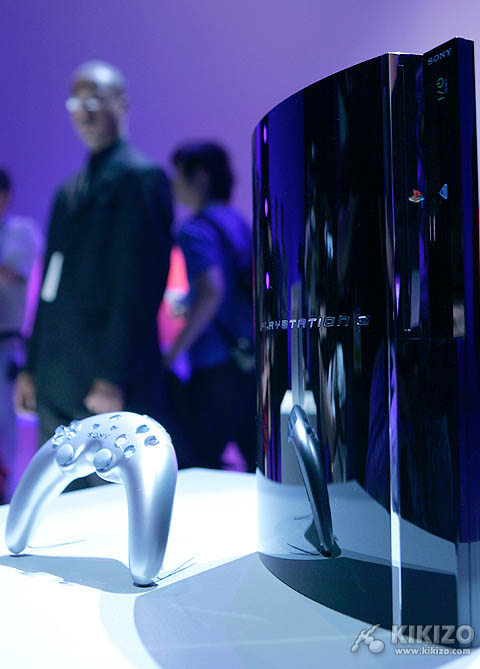
I wouldn't count on any of these pictures looking like the final result. The controller is pretty much just a prototype... they'll change it. That console is also empty inside, so at best we can just regard it as something they are aiming for. That said - I'm sure their controllers will be multicolored... changing a color to get more people to buy them is something these companies do.
06-20-05 | 03:06 PM
#75
Thread Starter
Banned
Joined: Jan 2002
Posts: 6,677
Likes: 0
Received 0 Likes
on
0 Posts
From: Blu-Ray: We Don't Need No Stinkin' Petition
In the latest issue of Nikkei Electronics, Sony Computer Entertainment President Ken Kutaragi talked about some of the various functions and aesthetics of the Cell chip, which will be used in the PlayStation 3. In the article, Kutaragi detailed how the aesthetics of the Cell chip will cut its production costs as well as how it may also lead to a dual-CPU Cell home server.
Kutaragi stated earlier that although the Cell microprocessor comes with eight synergistic processor elements (SPEs) for multi-core processing, the chip only uses seven of them. Kutaragi explained that ignoring one SPE as a redundancy will improve the chip's production yield and allow costs to drop dramatically. In other words, Sony can ship a Cell chip with one defective SPE (out of its eight) as a working product, since the chip only uses seven SPEs to begin with.
"This is the ultimate aesthetic. The number of SPEs we equip to the Cell and how many we will actually use are two different things. I wanted to adopt the idea of 'redundancy' to the development of semiconductors. Logic LSIs, excluding memory chips, are considered defective and un-shippable if just one transistor or line doesn't work. If the Cell's final chip dimension is about 200 square millimeters, making one without any defects is extremely difficult. We can't reach our anticipated production yield with that. Of course we'll take various measures to lower the defect density, but that won't be enough. But by considering one or two SPEs as a redundancy from the very beginning, we can still use a Cell chip even if it's partially defective," Kutaragi said, who also revealed that a similar scheme would also be used for the PlayStation 3's RSX graphics processor.
"An interesting question is what will be done with the Cell chips that only have six working SPEs," continued Kutaragi. "We won't use it for the PS3, of course. Rather, I'm seriously thinking about using two of these chips to create a home server. Home servers have less of a constraint in case size and board dimension when compared to the PS3, and we can make enough space for two Cell chips. That will make it a product with a total of twelve SPEs. This is possible with the Cell since it can use as many SPEs as it needs. And this will bring a use to Cell chips that aren't fit for the PS3."
Kutaragi went on to explain that one of the reasons why the Cell chip for the PS3 was announced to run at 3.2GHz at E3 was due to heat issues. Back when the chip was first announced at the International Solid-State Circuits Conference (ISSCC), its spec said that the chip could run at 4GHz. "We could create a 4GHz Cell if we were aiming to sell it for a high-end computer," Kutaragi said. "There's also the issue of heat. We might have had to create the PS3 with a bigger body if we adopted a 4GHz chip for it."
Kutaragi commented that the PS3's detachable hard drive would most likely be 80GB, since that is the standard capacity of a general 2.5-inch hard drive. "We're going to run an all-purpose OS on it." Kutaragi said, which seems to back up his previous comments that he plans to pre-install Linux on the PS3's HDD.
Kutaragi was asked if he has any plans to add a DVD recorder or home server capability to the PS3. "In that case, you'll need at least one Terabyte of disc space" he said. "Even that much space won't be enough if it's going to be HDTV compliant. To put that much HDD space into this machine is impossible. Rather than to equip some mediocre amount of HDD space, it's better to make it detachable. There's also the possibility of a home server equipped with the Cell chip. But when we first release it as a game machine, we won't need a HDD."
Kutaragi also talked about his decision to adopt Blu-ray for the PlayStation 3 rather than wait a bit longer to see if the Blu-ray and HD-DVD factions would come to a final conclusion on a unified disc standard. "E3 was the last chance," Kutaragi said. "The PS3 is the console of the future, so I wanted an extreme amount of capacity. But for that, we need cutting-edge technology, and not technology that is currently available. My suggestion was to come to an agreement with a physical format that is as close to [the Blu-ray's] 0.1mm as possible. But the PS3 launches in Spring 2006. If we had continued to wait for a unified standard, we wouldn't be able to release the PS3. We no longer have any more time. It's game over."
Kutaragi strongly stressed that he has no plans to compromise on the Blu-ray's 0.1mm physical format, which gives it the upper hand to HD-DVD in terms of capacity. However, he said that he could wait until Spring 2006 to see if Sony and Toshiba could come up with a unified standard that's still based on the Blu-ray's physical format. As long as the change is only in the disc's logical structure, the PS3 can still adapt to it with some software updates. Despite Kutaragi's comments, it has been reported that the Toshiba and Sony are still in negotiations to work on a standard format.
Kutaragi also talked about the look of the PS3, commenting that he and Teiyu Goto, the console designer of the original PlayStation and the PS2, decided to give the PS3's body a curved surface after considering shapes that hadn't existed in either consoles or computers in the past. When asked if the curved surface made developing internal architecture difficult, Kutaragi said that internal architecture was already being considered when the body was designed, like where the BD-ROM reader's motor and connectors would be placed, as well as how heat would be released. Kutaragi also stated that he prepared three PS3 mock-ups for E3 in silver, white, and black. He settled on the silver one, after gathering a consensus from a variety of different developers and distributors.
"When we released the PlayStation in 1994, Nintendo's Famicom was mainstream," Kutaragi said. "We wanted to create a game machine that wouldn't lose to them, so it's true that we were conscious about the Famicom when we decided on the PS's color and shape. When we released the PS2 in 2000, our goal was to make it blend in naturally with home electronics. We wanted it to be lying around the TV, but not as a game machine, and we worked hard on its DVD playback capabilities. When people used the [original] PS, they'd take it out and unwrap the controller's cord, and then put it back when they're finished playing with it. I hated that. Home electronics always sit right next to a TV, and home electronics are black, so we made sure that the PS2 was black. However, the PS3 will go beyond home electronics and computers. There is no prior example to what the PS3 will be."
Kutaragi stated earlier that although the Cell microprocessor comes with eight synergistic processor elements (SPEs) for multi-core processing, the chip only uses seven of them. Kutaragi explained that ignoring one SPE as a redundancy will improve the chip's production yield and allow costs to drop dramatically. In other words, Sony can ship a Cell chip with one defective SPE (out of its eight) as a working product, since the chip only uses seven SPEs to begin with.
"This is the ultimate aesthetic. The number of SPEs we equip to the Cell and how many we will actually use are two different things. I wanted to adopt the idea of 'redundancy' to the development of semiconductors. Logic LSIs, excluding memory chips, are considered defective and un-shippable if just one transistor or line doesn't work. If the Cell's final chip dimension is about 200 square millimeters, making one without any defects is extremely difficult. We can't reach our anticipated production yield with that. Of course we'll take various measures to lower the defect density, but that won't be enough. But by considering one or two SPEs as a redundancy from the very beginning, we can still use a Cell chip even if it's partially defective," Kutaragi said, who also revealed that a similar scheme would also be used for the PlayStation 3's RSX graphics processor.
"An interesting question is what will be done with the Cell chips that only have six working SPEs," continued Kutaragi. "We won't use it for the PS3, of course. Rather, I'm seriously thinking about using two of these chips to create a home server. Home servers have less of a constraint in case size and board dimension when compared to the PS3, and we can make enough space for two Cell chips. That will make it a product with a total of twelve SPEs. This is possible with the Cell since it can use as many SPEs as it needs. And this will bring a use to Cell chips that aren't fit for the PS3."
Kutaragi went on to explain that one of the reasons why the Cell chip for the PS3 was announced to run at 3.2GHz at E3 was due to heat issues. Back when the chip was first announced at the International Solid-State Circuits Conference (ISSCC), its spec said that the chip could run at 4GHz. "We could create a 4GHz Cell if we were aiming to sell it for a high-end computer," Kutaragi said. "There's also the issue of heat. We might have had to create the PS3 with a bigger body if we adopted a 4GHz chip for it."
Kutaragi commented that the PS3's detachable hard drive would most likely be 80GB, since that is the standard capacity of a general 2.5-inch hard drive. "We're going to run an all-purpose OS on it." Kutaragi said, which seems to back up his previous comments that he plans to pre-install Linux on the PS3's HDD.
Kutaragi was asked if he has any plans to add a DVD recorder or home server capability to the PS3. "In that case, you'll need at least one Terabyte of disc space" he said. "Even that much space won't be enough if it's going to be HDTV compliant. To put that much HDD space into this machine is impossible. Rather than to equip some mediocre amount of HDD space, it's better to make it detachable. There's also the possibility of a home server equipped with the Cell chip. But when we first release it as a game machine, we won't need a HDD."
Kutaragi also talked about his decision to adopt Blu-ray for the PlayStation 3 rather than wait a bit longer to see if the Blu-ray and HD-DVD factions would come to a final conclusion on a unified disc standard. "E3 was the last chance," Kutaragi said. "The PS3 is the console of the future, so I wanted an extreme amount of capacity. But for that, we need cutting-edge technology, and not technology that is currently available. My suggestion was to come to an agreement with a physical format that is as close to [the Blu-ray's] 0.1mm as possible. But the PS3 launches in Spring 2006. If we had continued to wait for a unified standard, we wouldn't be able to release the PS3. We no longer have any more time. It's game over."
Kutaragi strongly stressed that he has no plans to compromise on the Blu-ray's 0.1mm physical format, which gives it the upper hand to HD-DVD in terms of capacity. However, he said that he could wait until Spring 2006 to see if Sony and Toshiba could come up with a unified standard that's still based on the Blu-ray's physical format. As long as the change is only in the disc's logical structure, the PS3 can still adapt to it with some software updates. Despite Kutaragi's comments, it has been reported that the Toshiba and Sony are still in negotiations to work on a standard format.
Kutaragi also talked about the look of the PS3, commenting that he and Teiyu Goto, the console designer of the original PlayStation and the PS2, decided to give the PS3's body a curved surface after considering shapes that hadn't existed in either consoles or computers in the past. When asked if the curved surface made developing internal architecture difficult, Kutaragi said that internal architecture was already being considered when the body was designed, like where the BD-ROM reader's motor and connectors would be placed, as well as how heat would be released. Kutaragi also stated that he prepared three PS3 mock-ups for E3 in silver, white, and black. He settled on the silver one, after gathering a consensus from a variety of different developers and distributors.
"When we released the PlayStation in 1994, Nintendo's Famicom was mainstream," Kutaragi said. "We wanted to create a game machine that wouldn't lose to them, so it's true that we were conscious about the Famicom when we decided on the PS's color and shape. When we released the PS2 in 2000, our goal was to make it blend in naturally with home electronics. We wanted it to be lying around the TV, but not as a game machine, and we worked hard on its DVD playback capabilities. When people used the [original] PS, they'd take it out and unwrap the controller's cord, and then put it back when they're finished playing with it. I hated that. Home electronics always sit right next to a TV, and home electronics are black, so we made sure that the PS2 was black. However, the PS3 will go beyond home electronics and computers. There is no prior example to what the PS3 will be."