


Colorized films on DVD -- NOT a general discussion on film colorization
 10-27-08 | 12:24 PM
#101
Senior Member
Joined: Jan 2007
Posts: 260
Likes: 0
Received 0 Likes
on
0 Posts
Not a surprise.
-These cartoons have not quite acceptable market today.
-Most was already colorized, but using a re-drawing technic, were new color backgrounds were painted and animation cell contours was got by projecting footage over a drawing board and retracing the animnation, and filling with color inks. So it was photograph in 35mm color film and looks almost as a new cartoon, remaining only the animation trace and the original sound. many early Poppey cartoons went to this "re-drawing into color process".
-The original cartoons of that era, in B&W, specially the early ones, even original camera negative, was already contrasting, since most was paint in a limited grayscale pallete.Only a few had used watercolor carefully to create a broad range graytones. The redrawing techic above mentioned created better background with better grayrange to proper be in colors, and filled the animation cells contours with less bright tone for skin and clothes, so saturated colors can fit in bether.
I remamber I saw a Betty Boop DVD review and there were the B&W and the re-drawing in color. the B&W was almost pure black and pue white, and the re-drawing colors was quite diferente and pleasant.
If Legand Films would colorized B&W cartoons like those in limited graytones ones, they could not put satured colors, unless they intentionally alterate the B&W luminance. And for that they would need to redrw the background, I imagine, since many background was so simple and contrating that could not be just alterned in luminance by their actual tools, since background have usually no well definede border od limits.
-These cartoons have not quite acceptable market today.
-Most was already colorized, but using a re-drawing technic, were new color backgrounds were painted and animation cell contours was got by projecting footage over a drawing board and retracing the animnation, and filling with color inks. So it was photograph in 35mm color film and looks almost as a new cartoon, remaining only the animation trace and the original sound. many early Poppey cartoons went to this "re-drawing into color process".
-The original cartoons of that era, in B&W, specially the early ones, even original camera negative, was already contrasting, since most was paint in a limited grayscale pallete.Only a few had used watercolor carefully to create a broad range graytones. The redrawing techic above mentioned created better background with better grayrange to proper be in colors, and filled the animation cells contours with less bright tone for skin and clothes, so saturated colors can fit in bether.
I remamber I saw a Betty Boop DVD review and there were the B&W and the re-drawing in color. the B&W was almost pure black and pue white, and the re-drawing colors was quite diferente and pleasant.
If Legand Films would colorized B&W cartoons like those in limited graytones ones, they could not put satured colors, unless they intentionally alterate the B&W luminance. And for that they would need to redrw the background, I imagine, since many background was so simple and contrating that could not be just alterned in luminance by their actual tools, since background have usually no well definede border od limits.
Last edited by Alfred Bergman; 10-29-08 at 04:58 PM. Reason: Wrong spell...
 11-02-08 | 01:20 PM
#102
Needs to contact an admin about multiple accounts
Joined: Sep 2007
Posts: 36
Likes: 0
Received 0 Likes
on
0 Posts
Not a surprise.
-These cartoons have not quite acceptable market today.
-Most was already colorized, but using a re-drawing technic, were new color backgrounds were painted and animation cell contours was got by projecting footage over a drawing board and retracing the animnation, and filling with color inks. So it was photograph in 35mm color film and looks almost as a new cartoon, remaining only the animation trace and the original sound. many early Poppey cartoons went to this "re-drawing into color process".
-The original cartoons of that era, in B&W, specially the early ones, even original camera negative, was already contrasting, since most was paint in a limited grayscale pallete.Only a few had used watercolor carefully to create a broad range graytones. The redrawing techic above mentioned created better background with better grayrange to proper be in colors, and filled the animation cells contours with less bright tone for skin and clothes, so saturated colors can fit in bether.
I remamber I saw a Betty Boop DVD review and there were the B&W and the re-drawing in color. the B&W was almost pure black and pue white, and the re-drawing colors was quite diferente and pleasant.
If Legand Films would colorized B&W cartoons like those in limited graytones ones, they could not put satured colors, unless they intentionally alterate the B&W luminance. And for that they would need to redrw the background, I imagine, since many background was so simple and contrating that could not be just alterned in luminance by their actual tools, since background have usually no well definede border od limits.
-These cartoons have not quite acceptable market today.
-Most was already colorized, but using a re-drawing technic, were new color backgrounds were painted and animation cell contours was got by projecting footage over a drawing board and retracing the animnation, and filling with color inks. So it was photograph in 35mm color film and looks almost as a new cartoon, remaining only the animation trace and the original sound. many early Poppey cartoons went to this "re-drawing into color process".
-The original cartoons of that era, in B&W, specially the early ones, even original camera negative, was already contrasting, since most was paint in a limited grayscale pallete.Only a few had used watercolor carefully to create a broad range graytones. The redrawing techic above mentioned created better background with better grayrange to proper be in colors, and filled the animation cells contours with less bright tone for skin and clothes, so saturated colors can fit in bether.
I remamber I saw a Betty Boop DVD review and there were the B&W and the re-drawing in color. the B&W was almost pure black and pue white, and the re-drawing colors was quite diferente and pleasant.
If Legand Films would colorized B&W cartoons like those in limited graytones ones, they could not put satured colors, unless they intentionally alterate the B&W luminance. And for that they would need to redrw the background, I imagine, since many background was so simple and contrating that could not be just alterned in luminance by their actual tools, since background have usually no well definede border od limits.
Hey Alfred,
You're very knowledgeable about the process of colorization but you're somewhat off target regarding the underlying proprietary technology of the Legend Films process, particularly your speculation on limiitations. We have indeed produced Technicolor effects and, depending on the dynmamic range of the underlying element, there's very little we can't achieve in terms of color and detail. I know you are constantly harping the fact that we should be manipulating the underlying luminance of the black and white element. We avoid changing the original black and white to any great extent even though it can make the colors pop significantly more with increased contrast. We tend not to take that liberty.
However, on our latest film, Holiday Inn which was released last month, we not only increased contrast but we also removed some of the excessive grain from the black and white element, but only for the colorized version. The black and white original that is the main feature of the release remains exactly as it was originally transferred. Many people feel the excessive grain takes away from the quality of the image so I asked the studio for permission to remove a percentage of grain and to increase contrast on what seemed to be a rather flat (low-con) presentation. We did the work on a cut by cut basis to insure we did not lose detail. I believe the production quality on "Holiday Inn" is comparable to "It's A Wonderful Life". We employed our latest Legend Films technical adances on both Holiday films.
By the way Alfred, your single frame colorized images are very attractive and show a good deal of talent. The trick is applying that same mastery to every detail of every object within every frame in the 180,000 frames that make up an average film and to do it within a reasonable budget but with the highest quality. "It's A Wonderful Life" was completed in 7 weeks and "Holiday Inn" was completed in 6 weeks yet I believe they stand as the best colorized films produced to date.
I Don't think this forum was intended as a detailed technical discussion of the general process of colorization. Rather, I think it is intended as a place to discuss and critique the early and current colorized films.
11-02-08 | 10:11 PM
#103
Senior Member
Joined: Jan 2004
Posts: 570
Likes: 0
Received 0 Likes
on
0 Posts
From: Simi Valley, CA
Barry, since you frequent this thread for sure I thought I'd throw on the table the hopes for THE VAMPIRE BAT from the 1930's with Lionel Atwill, a Poverty Row film that was actually shot on the Universal backlot so it has alot of that kind of look and feel.
It is apparently public domain and I would love to see this one with a decent print.
It is apparently public domain and I would love to see this one with a decent print.
11-03-08 | 04:18 AM
#104
Suspended
On my wish list: The Red House (Delmer Daves, 1947), a public domain classic suspense with a great Miklos Rozsa score, only available in a so-so transfer of a very bad, unrestored print that doesn't do justice to either its photography or its music.
The Alpha Video Region 1 DVD is so bad, there is an argument whether it's a transfer of a video or not, even though every scratch, hiss and pockmark come off beautifully.
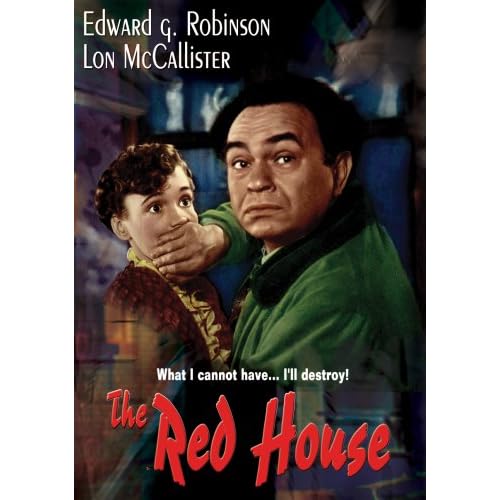
The Alpha Video Region 1 DVD is so bad, there is an argument whether it's a transfer of a video or not, even though every scratch, hiss and pockmark come off beautifully.
Last edited by baracine; 11-03-08 at 04:20 AM.
11-03-08 | 08:36 AM
#105
Senior Member
Joined: Jan 2004
Posts: 570
Likes: 0
Received 0 Likes
on
0 Posts
From: Simi Valley, CA
Semi-off topic question for Barry-
Barry, how did your co-venture with Paramount work out? It seems Legend is poised to expand beyond only colorization releases here. You had a few titles there that were pretty nifty discs....THE SKULL and THE MAN WHO COULD CHEAT DEATH were two I thought would NEVER show up on DVD and they looked pretty darn good.
Any other such plans in the works??
Barry, how did your co-venture with Paramount work out? It seems Legend is poised to expand beyond only colorization releases here. You had a few titles there that were pretty nifty discs....THE SKULL and THE MAN WHO COULD CHEAT DEATH were two I thought would NEVER show up on DVD and they looked pretty darn good.
Any other such plans in the works??
11-04-08 | 03:22 PM
#106
Needs to contact an admin about multiple accounts
Joined: Sep 2007
Posts: 36
Likes: 0
Received 0 Likes
on
0 Posts
Semi-off topic question for Barry-
Barry, how did your co-venture with Paramount work out? It seems Legend is poised to expand beyond only colorization releases here. You had a few titles there that were pretty nifty discs....THE SKULL and THE MAN WHO COULD CHEAT DEATH were two I thought would NEVER show up on DVD and they looked pretty darn good.
Any other such plans in the works??
Barry, how did your co-venture with Paramount work out? It seems Legend is poised to expand beyond only colorization releases here. You had a few titles there that were pretty nifty discs....THE SKULL and THE MAN WHO COULD CHEAT DEATH were two I thought would NEVER show up on DVD and they looked pretty darn good.
Any other such plans in the works??
Our co-venture with Paramount is working out great. You're right, those titles and many other jems would likely never see the light of day if it were not for Legend Films. They are all new High Def transfers which I personally supervised. The response to these titles has been overwhelmingly positive. Reviewers have praised the fact that original aspect ratios were preserved and there was no excessive restoration that might have created artifacts. Our intention was to duplicate what one would experience in a theatrical release print. We're in talks with other studios to bring more outstanding films to DVD for the first time.
11-04-08 | 05:33 PM
#107
DVD Talk Special Edition
Joined: Sep 2002
Posts: 1,030
Likes: 0
Received 0 Likes
on
0 Posts
From: Georgia, USA
Would it be possible to get into the Republic library via Paramount if the Lionsgate deal doesn't prevent it?
Specifically, the serials and Max Fleischer cartoons. Maybe features like The Quiet Man and Invasion of the Body Snatchers. Despite my caveats on colorization, even with Legend Films' superlative technical work, I'd imagine new colorized editions of the Betty Boop cartoons would be a great way to combat the lousy quality public domain issues. Of course, as long as the originals are included!
Specifically, the serials and Max Fleischer cartoons. Maybe features like The Quiet Man and Invasion of the Body Snatchers. Despite my caveats on colorization, even with Legend Films' superlative technical work, I'd imagine new colorized editions of the Betty Boop cartoons would be a great way to combat the lousy quality public domain issues. Of course, as long as the originals are included!
11-04-08 | 06:09 PM
#108
Senior Member
Joined: Jan 2004
Posts: 570
Likes: 0
Received 0 Likes
on
0 Posts
From: Simi Valley, CA
Our co-venture with Paramount is working out great. You're right, those titles and many other jems would likely never see the light of day if it were not for Legend Films. They are all new High Def transfers which I personally supervised. The response to these titles has been overwhelmingly positive. Reviewers have praised the fact that original aspect ratios were preserved and there was no excessive restoration that might have created artifacts. Our intention was to duplicate what one would experience in a theatrical release print. We're in talks with other studios to bring more outstanding films to DVD for the first time.
11-04-08 | 06:45 PM
#109
DVD Talk Legend
11-04-08 | 10:25 PM
#111
Senior Member
Joined: Jan 2004
Posts: 570
Likes: 0
Received 0 Likes
on
0 Posts
From: Simi Valley, CA
Yes, and its sad because its pointless. Honestly folks...if you don't like colorized movies, start a thread and rail to your hearts content. I'm pretty ambivalent about it but this kind of childish idiocy works against your cause. And Nemien will just boot troublemakers off the boards anyway.
11-04-08 | 10:36 PM
#112
DVD Talk Legend
Joined: Sep 1999
Posts: 10,800
Received 84 Likes
on
51 Posts
From: Building attractions one theme park at a time.
Seriously tho....
Barry, big thanks to you and Legend for releasing Houdini on DVD. It's a title I never thought I'd see on my favorite format. Looking forward to other titles from the other licenses you acquire.
And if you can get Invasion of the Body Snatchers (tho I know it's a Republic title), that would be pure awesome.
Barry, big thanks to you and Legend for releasing Houdini on DVD. It's a title I never thought I'd see on my favorite format. Looking forward to other titles from the other licenses you acquire.
And if you can get Invasion of the Body Snatchers (tho I know it's a Republic title), that would be pure awesome.
Last edited by The Valeyard; 11-04-08 at 10:38 PM.
11-04-08 | 10:45 PM
#113
DVD Talk Legend
I jest...really. I have tried to stay out of it this time around, as your right no one is ever going to change their minds on this subject. I will say Legend has done a good job by keeping the B&W versions on their disc, however I stand by my long going belief that this is a tragedy of cinema history. I would never want my name to be synonymous with the likes of Ted Turner when it comes to those abortions. But anything for a buck eh?
11-05-08 | 07:32 AM
#114
Senior Member
Joined: Jan 2008
Posts: 503
Likes: 0
Received 0 Likes
on
0 Posts
From: Alabama
I thought maybe I'd find a complete list of colorized films here.
BTW, I like 'em.
Seems like I read somewhere not too long ago about possible plans for colorizing "I Love Lucy" TV shows?
BTW, I like 'em.
Seems like I read somewhere not too long ago about possible plans for colorizing "I Love Lucy" TV shows?
11-05-08 | 10:43 AM
#115
Needs to contact an admin about multiple accounts
Joined: Sep 2007
Posts: 36
Likes: 0
Received 0 Likes
on
0 Posts
Hi Flicker,
You might want to visit the Legend Films web site for films that have been colorized over the past 6 years. You'll also find a clip from "I Love Lucy" "Lucy Goes To Scotland". The original director's son, Greg Oppenheimer, in association with CBS hired Legend to colorize that episode. Desi, Luci and Oppenheimer originally wanted that particular episode in color because it was a dream sequence and they felt it would work better in color. Apparently, it was the first time the Arnez family was on the set for a whole shoot and someone took color home movies of the event. We used those home movies as a reference to get the costumes and sets precise. The plaids in particular were very detailed as you might be able to see from the low resolution sample on the Legend Films' site. CBS included that colorized episode as a special feature along with the original black and white version in the full series set.
Universal took the success of that colorized episode and had us color produce an episode of "The Munsters" "Family Portrait" this year. They intended to include it as a special feature on the two series set but when they saw the quality of the final product they decided to release it as a single as well. The series and the special single episode were released last month and are available in stores. I think Universal is interested in seeing how well it does before colorizing more. Of particular interest, we not only colorized that episode but we also converted part of it in 3D as a test. The result is remarkable when viewed on a Samsung DLP HD set with LCD glasses. It looks like it was shot both in color and 3D.
11-05-08 | 01:12 PM
#116

Senior Member
Joined: Nov 2004
Posts: 276
Likes: 0
Received 0 Likes
on
0 Posts
From: Modesto, CA
Universal took the success of that colorized episode and had us color produce an episode of "The Munsters" "Family Portrait" this year....Of particular interest, we not only colorized that episode but we also converted part of it in 3D as a test. The result is remarkable when viewed on a Samsung DLP HD set with LCD glasses. It looks like it was shot both in color and 3D.
 11-06-08 | 11:33 AM
#117
Senior Member
Joined: Jan 2007
Posts: 260
Likes: 0
Received 0 Likes
on
0 Posts
About Munster in color: http://www.youtube.com/watch?v=LTPGlBuYxNo
And image samples:


And samples of original colors stills converted to 3D (required anaglyph glasses):
http://www.flickr.com/photos/2381691...92315/sizes/o/
http://www.flickr.com/photos/2381691...n/photostream/
http://www.flickr.com/photos/2381691...92323/sizes/o/
Barry, I understand that you are developing tools to 3D convertion, and made tests. But I saw somethimg about George Lucas intent to convert all Star Wars films to 3D, but was reported that the process cost about 50.000 to 100.000 dollars per minute of film.
Is your 3D process viable enough in terms of cost, to allow a entire TV series be converted to 3D and generate profit??? I supose it's still quite more expansive than colorization process.
And image samples:

And samples of original colors stills converted to 3D (required anaglyph glasses):
http://www.flickr.com/photos/2381691...92315/sizes/o/
http://www.flickr.com/photos/2381691...n/photostream/
http://www.flickr.com/photos/2381691...92323/sizes/o/
Barry, I understand that you are developing tools to 3D convertion, and made tests. But I saw somethimg about George Lucas intent to convert all Star Wars films to 3D, but was reported that the process cost about 50.000 to 100.000 dollars per minute of film.
Is your 3D process viable enough in terms of cost, to allow a entire TV series be converted to 3D and generate profit??? I supose it's still quite more expansive than colorization process.
Last edited by Alfred Bergman; 11-06-08 at 11:48 AM.
11-06-08 | 12:06 PM
#118
About Munster in color: http://www.youtube.com/watch?v=LTPGlBuYxNo
And image samples:
And samples of original colors stills converted to 3D (required anaglyph glasses):
http://www.flickr.com/photos/2381691...92315/sizes/o/
http://www.flickr.com/photos/2381691...n/photostream/
http://www.flickr.com/photos/2381691...92323/sizes/o/
Barry, I understand that you are developing tools to 3D convertion, and made tests. But I saw somethimg about George Lucas intent to convert all Star Wars films to 3D, but was reported that the process cost about 50.000 to 100.000 dollars per minute of film.
Is your 3D process viable enough in terms of cost, to allow a entire TV series be converted to 3D and generate profit??? I supose it's still quite more expansive than colorization process.
And image samples:
And samples of original colors stills converted to 3D (required anaglyph glasses):
http://www.flickr.com/photos/2381691...92315/sizes/o/
http://www.flickr.com/photos/2381691...n/photostream/
http://www.flickr.com/photos/2381691...92323/sizes/o/
Barry, I understand that you are developing tools to 3D convertion, and made tests. But I saw somethimg about George Lucas intent to convert all Star Wars films to 3D, but was reported that the process cost about 50.000 to 100.000 dollars per minute of film.
Is your 3D process viable enough in terms of cost, to allow a entire TV series be converted to 3D and generate profit??? I supose it's still quite more expansive than colorization process.
Thanks for doing that Alfred!!!
11-06-08 | 12:25 PM
#119
Needs to contact an admin about multiple accounts
Joined: Sep 2007
Posts: 36
Likes: 0
Received 0 Likes
on
0 Posts
About Munster in color: http://www.youtube.com/watch?v=LTPGlBuYxNo
And image samples:
And samples of original colors stills converted to 3D (required anaglyph glasses):
http://www.flickr.com/photos/2381691...92315/sizes/o/
http://www.flickr.com/photos/2381691...n/photostream/
http://www.flickr.com/photos/2381691...92323/sizes/o/
Barry, I understand that you are developing tools to 3D convertion, and made tests. But I saw somethimg about George Lucas intent to convert all Star Wars films to 3D, but was reported that the process cost about 50.000 to 100.000 dollars per minute of film.
Is your 3D process viable enough in terms of cost, to allow a entire TV series be converted to 3D and generate profit??? I supose it's still quite more expansive than colorization process.
And image samples:
And samples of original colors stills converted to 3D (required anaglyph glasses):
http://www.flickr.com/photos/2381691...92315/sizes/o/
http://www.flickr.com/photos/2381691...n/photostream/
http://www.flickr.com/photos/2381691...92323/sizes/o/
Barry, I understand that you are developing tools to 3D convertion, and made tests. But I saw somethimg about George Lucas intent to convert all Star Wars films to 3D, but was reported that the process cost about 50.000 to 100.000 dollars per minute of film.
Is your 3D process viable enough in terms of cost, to allow a entire TV series be converted to 3D and generate profit??? I supose it's still quite more expansive than colorization process.
Nice try Alfred. You never fail to amaze me. Unfortunately the way you did the anaglyph the image looks like cardboard cut outs without object dimension. The problem with anaglyph (red-green glasses) is that you lose most of the color. Using passive polarizing glasses or LCD glasses maintains color. The color stills from the episode look pretty good.
The process for segmenting all the objects in a movie or TV episode is precisely the same as colorization. So we can convert a film in a fraction of the time anyone else has quoted with superior quality. We also have a track record of producing 120 films in the past 6 years.
And yes, our process is significantly cheaper than those figures.
11-06-08 | 12:43 PM
#120
Senior Member
Joined: Jan 2007
Posts: 260
Likes: 0
Received 0 Likes
on
0 Posts
Nice to hear that you adjusted the B&W grading to get a bether colorization look for Holiday Inn.
If I was a director and had a B&W to colorized, and wished that the light shirt of a character was colorized as dark red, would that be possible???
I never saw colorizatiuon alterate the brignteness of a specific object on scene in order to get a wished color. I supose it would require more detailed delineation of contourns, as human eyes have much more atention to shadow tones than to saturation.
Barry, I would love to color design a film for Legend Film.
If I was a director and had a B&W to colorized, and wished that the light shirt of a character was colorized as dark red, would that be possible???
I never saw colorizatiuon alterate the brignteness of a specific object on scene in order to get a wished color. I supose it would require more detailed delineation of contourns, as human eyes have much more atention to shadow tones than to saturation.
Barry, I would love to color design a film for Legend Film.
Hey Alfred,
However, on our latest film, Holiday Inn which was released last month, we not only increased contrast but we also removed some of the excessive grain from the black and white element, but only for the colorized version.
By the way Alfred, your single frame colorized images are very attractive and show a good deal of talent. The trick is applying that same mastery to every detail of every object within every frame in the 180,000 frames that make up an average film and to do it within a reasonable budget but with the highest quality. "It's A Wonderful Life" was completed in 7 weeks and "Holiday Inn" was completed in 6 weeks yet I believe they stand as the best colorized films produced to date.
However, on our latest film, Holiday Inn which was released last month, we not only increased contrast but we also removed some of the excessive grain from the black and white element, but only for the colorized version.
By the way Alfred, your single frame colorized images are very attractive and show a good deal of talent. The trick is applying that same mastery to every detail of every object within every frame in the 180,000 frames that make up an average film and to do it within a reasonable budget but with the highest quality. "It's A Wonderful Life" was completed in 7 weeks and "Holiday Inn" was completed in 6 weeks yet I believe they stand as the best colorized films produced to date.
Last edited by Alfred Bergman; 11-06-08 at 01:18 PM.
11-06-08 | 01:10 PM
#121
Senior Member
Joined: Jan 2007
Posts: 260
Likes: 0
Received 0 Likes
on
0 Posts
Barry, I didnt made those 3D conversion fot The Munsters. I tried 3D montage times ago by combining images of actors in different angles caputed in a sequence, but never get the adventure of create a 3D from a single frame.
It's about the objects 3D dimention, real 3D depth, that I'm curious about. Some patterns are too complex and elaborated to 3D estimation algorithms. Those patterns behind a semi transparent objet like a curtain or fine clothes delicate tissue in movments... would became near impossible.
The only problem to 3D market today are the lack of affordable 3D devices in movies theater and home video. Do you think that will change soon??? Who will manufacture affordable 3D devices for home video???
It's about the objects 3D dimention, real 3D depth, that I'm curious about. Some patterns are too complex and elaborated to 3D estimation algorithms. Those patterns behind a semi transparent objet like a curtain or fine clothes delicate tissue in movments... would became near impossible.
The only problem to 3D market today are the lack of affordable 3D devices in movies theater and home video. Do you think that will change soon??? Who will manufacture affordable 3D devices for home video???
Last edited by Alfred Bergman; 11-06-08 at 01:16 PM.
11-06-08 | 01:20 PM
#122
Needs to contact an admin about multiple accounts
Joined: Sep 2007
Posts: 36
Likes: 0
Received 0 Likes
on
0 Posts
Barry, I didnt made the 3D conversion. I tried 3D montage times ago by combining images of actors in different angles caputed in a sequence, but never get the adventure of create a 3D from a single frame.
It's about the objects 3D dimention, real 3D depth, that I'm curious about.
The only problem to 3D market today are the lack of affordable 3D devices in movies theater and home video. Do you think that will change soon??? Who will manufacture affordable 3D devices for home video???
It's about the objects 3D dimention, real 3D depth, that I'm curious about.
The only problem to 3D market today are the lack of affordable 3D devices in movies theater and home video. Do you think that will change soon??? Who will manufacture affordable 3D devices for home video???
Katzenberg has been promoting 3D very heavily because Dreamworks and the other studios are committed to 3D releases. He expected there to be more screens today but the theaters have been slow. Nevertheless, they estimate that there will be 4,000 3D screens by 2010 and 10,000 by 2012, though I've heard various estimates over the past year.
Regarding TVs. Samsung and Mitsubishi have been selling 3D ready DLP HD TVs for 2.5 years and I understand there are 2 million of the sets out there. I have 4 in my studio. You simply have to go to NuVision or other site on-line and purchase the infrared transmitter and LCD glasses. You insert the infrared transmitter into the 3D out in the back of the set and turn on the 3D capability. The effect is stunning. The reason people generally don't know about the 3D ready TVs is because there has been no content. Content will be available via Blu-Ray. I've heard as soon as next year. All the major HD TV manufacturers are gearing up for 3D capabilities.
It will be the next revolution in Theater and TV.
11-06-08 | 01:24 PM
#123
Needs to contact an admin about multiple accounts
Joined: Sep 2007
Posts: 36
Likes: 0
Received 0 Likes
on
0 Posts
Barry, I didnt made the 3D conversion. I tried 3D montage times ago by combining images of actors in different angles caputed in a sequence, but never get the adventure of create a 3D from a single frame.
It's about the objects 3D dimention, real 3D depth, that I'm curious about.
The only problem to 3D market today are the lack of affordable 3D devices in movies theater and home video. Do you think that will change soon??? Who will manufacture affordable 3D devices for home video???
It's about the objects 3D dimention, real 3D depth, that I'm curious about.
The only problem to 3D market today are the lack of affordable 3D devices in movies theater and home video. Do you think that will change soon??? Who will manufacture affordable 3D devices for home video???
Katzenberg has been promoting 3D very heavily because Dreamworks and the other studios are committed to 3D releases. He expected there to be more screens today but the theaters have been slow. Nevertheless, they estimate that there will be 4,000 3D screens by 2010 and 10,000 by 2012, though I've heard various estimates over the past year. Katzenberg actually addressed the European equivelent of NAB in Amsterdam this year via live 3D video from Los Angeles. It was broadcast over a normal HD channel. I believe we'll be going to theaters to watch the Superbowl live and in 3D. We'll also be going to theaters to watch live concerts, plays, opera, etc in 3D.
Regarding TVs. Samsung and Mitsubishi have been selling 3D ready DLP HD TVs for 2.5 years and I understand there are 2 million of the sets out there. I have 4 in my studio. You simply have to go to NuVision or other site on-line and purchase the infrared transmitter and LCD glasses. You insert the infrared transmitter into the 3D out in the back of the set and turn on the 3D capability. The effect is stunning. The reason people generally don't know about the 3D ready TVs is because there has been no content. Content will be available via Blu-Ray. I've heard as soon as next year. All the major HD TV manufacturers are gearing up for 3D capabilities.
This is the next revolution in theatrical and home entertainment.
11-06-08 | 01:27 PM
#124
Needs to contact an admin about multiple accounts
Joined: Sep 2007
Posts: 36
Likes: 0
Received 0 Likes
on
0 Posts
Nice to hear that you adjusted the B&W grading to get a bether colorization look for Holiday Inn.
If I was a director and had a B&W to colorized, and wished that the light shirt of a character was colorized as dark red, would that be possible???
I never saw colorizatiuon alterate the brignteness of a specific object on scene in order to get a wished color. I supose it would require more detailed delineation of contourns, as human eyes have much more atention to shadow tones than to saturation.
Barry, I would love to color design a film for Legend Film.
If I was a director and had a B&W to colorized, and wished that the light shirt of a character was colorized as dark red, would that be possible???
I never saw colorizatiuon alterate the brignteness of a specific object on scene in order to get a wished color. I supose it would require more detailed delineation of contourns, as human eyes have much more atention to shadow tones than to saturation.
Barry, I would love to color design a film for Legend Film.
11-06-08 | 02:05 PM
#125
Senior Member
Joined: Jan 2007
Posts: 260
Likes: 0
Received 0 Likes
on
0 Posts
Barry, the client always have reason :-)
Many B&W fims had sets created to B&W photograph, and for colorization could generate too much faint color, due lack of more solid B&W tones (luminance values) for objects.
I bet that wasn't for the difficult and for the ethic of alterate luminance, you would do that often ;-)
I tried that in photos, and it require perfect rotoscope and difficult curves adjust. For moving images I understand that it's very difficult.
Many B&W fims had sets created to B&W photograph, and for colorization could generate too much faint color, due lack of more solid B&W tones (luminance values) for objects.
I bet that wasn't for the difficult and for the ethic of alterate luminance, you would do that often ;-)
I tried that in photos, and it require perfect rotoscope and difficult curves adjust. For moving images I understand that it's very difficult.