


Album by Album: David Bowie
 10-01-09 | 11:04 AM
#101

DVD Talk Limited Edition
Re: Album by Album: David Bowie
Low is a great album. I couldn't really pick out a song, it's an album that's much better to listen to from beginning to end.
 10-01-09 | 03:36 PM
#102

Banned by request
10-01-09 | 04:37 PM
#103

DVD Talk Hero
06-28-10 | 03:17 PM
#104

DVD Talk Limited Edition
Re: Album by Album: David Bowie
C'mon, Bowie lovers, let's keep this thread alive!
I'll move on to the next in the "Berlin" trilogy --
'HEROES'
1977

Track listing:
"Beauty and the Beast" – 3:32
"Joe the Lion" – 3:05
"'Heroes'" (Bowie, Brian Eno) – 6:07
"Sons of the Silent Age" – 3:15
"Blackout" – 3:50
"V-2 Schneider" – 3:10
"Sense of Doubt" – 3:57
"Moss Garden" (Bowie, Eno) – 5:03
"Neuköln" (Bowie, Eno) – 4:34
"The Secret Life of Arabia" (Bowie, Eno, Carlos Alomar) – 3:46
Personnel
David Bowie – vocals, keyboards, guitars, saxophone, koto, background vocals
Carlos Alomar – rhythm guitar
Dennis Davis – drums, percussion
George Murray – bass
Brian Eno – synthesizers, keyboards, guitar treatments
Robert Fripp – lead guitar
Tony Visconti – backing vocals
Antonia Maass – backing vocals
AllMusic review:
"Repeating the formula of Low's half-vocal/half-instrumental structure, Heroes develops and strengthens the sonic innovations David Bowie and Brian Eno explored on their first collaboration. The vocal songs are fuller, boasting harder rhythms and deeper layers of sound. Much of the harder-edged sound of Heroes is due to Robert Fripp's guitar, which provides a muscular foundation for the electronics, especially on the relatively conventional rock songs. Similarly, the instrumentals on Heroes are more detailed, this time showing a more explicit debt to German synth pop and European experimental rock. Essentially, the difference between Low and Heroes lies in the details, but the record is equally challenging and groundbreaking."
My own thoughts:
This one is overshadowed a bit by the masterpiece that is "Low," but I've always enjoyed it as much. It doesn't have quite as consistent a tone as "Low," but even if this album was "Heroes" and 9 filler tracks it'd still be a classic. I love the anguished menace of "Sons of the Silent Age" in particular, while of the instrumental "Sense of Doubt" really stands out to me. King Crimson's Robert Fripp really adds punch to the guitar solos, too. It's basically "Low II," and one of Bowie's finest moments.
Favourite track: "Heroes," of course. If I had to ever narrow Bowie's tunes down to a top 5 this iconic, anthemic work would be right up there.
I'll move on to the next in the "Berlin" trilogy --
'HEROES'
1977

Track listing:
"Beauty and the Beast" – 3:32
"Joe the Lion" – 3:05
"'Heroes'" (Bowie, Brian Eno) – 6:07
"Sons of the Silent Age" – 3:15
"Blackout" – 3:50
"V-2 Schneider" – 3:10
"Sense of Doubt" – 3:57
"Moss Garden" (Bowie, Eno) – 5:03
"Neuköln" (Bowie, Eno) – 4:34
"The Secret Life of Arabia" (Bowie, Eno, Carlos Alomar) – 3:46
Personnel
David Bowie – vocals, keyboards, guitars, saxophone, koto, background vocals
Carlos Alomar – rhythm guitar
Dennis Davis – drums, percussion
George Murray – bass
Brian Eno – synthesizers, keyboards, guitar treatments
Robert Fripp – lead guitar
Tony Visconti – backing vocals
Antonia Maass – backing vocals
AllMusic review:
"Repeating the formula of Low's half-vocal/half-instrumental structure, Heroes develops and strengthens the sonic innovations David Bowie and Brian Eno explored on their first collaboration. The vocal songs are fuller, boasting harder rhythms and deeper layers of sound. Much of the harder-edged sound of Heroes is due to Robert Fripp's guitar, which provides a muscular foundation for the electronics, especially on the relatively conventional rock songs. Similarly, the instrumentals on Heroes are more detailed, this time showing a more explicit debt to German synth pop and European experimental rock. Essentially, the difference between Low and Heroes lies in the details, but the record is equally challenging and groundbreaking."
My own thoughts:
This one is overshadowed a bit by the masterpiece that is "Low," but I've always enjoyed it as much. It doesn't have quite as consistent a tone as "Low," but even if this album was "Heroes" and 9 filler tracks it'd still be a classic. I love the anguished menace of "Sons of the Silent Age" in particular, while of the instrumental "Sense of Doubt" really stands out to me. King Crimson's Robert Fripp really adds punch to the guitar solos, too. It's basically "Low II," and one of Bowie's finest moments.
Favourite track: "Heroes," of course. If I had to ever narrow Bowie's tunes down to a top 5 this iconic, anthemic work would be right up there.
06-28-10 | 04:00 PM
#107
Banned by request
Re: Album by Album: David Bowie
"Heroes" is a brilliant album, taking the innovations of Low and deepening them to new effect. The first half is some of Bowie's best work, especially the pulsing "Beauty and the Beast" and the impassioned "Blackout." The second half is more ethereal and atmospheric than the instrumental side of Low. Using Brian Eno's Oblique Strategy cards, he and Bowie brought ambient music to the masses. The album's closer, "The Secret Life of Arabia" showed Bowie's willingness to get back into the pop game, but on his own terms, of course.
09-19-10 | 02:42 PM
#108
Banned by request
Re: Album by Album: David Bowie
Lodger (1979)
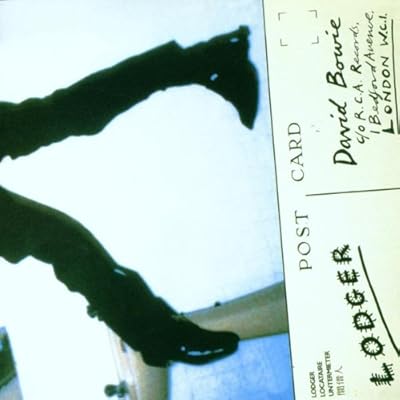
1 Fantastic Voyage (Bowie, Eno) 2:54
2 African Night Flight (Bowie, Eno) 2:55
3 Move On (Bowie) 3:18
4 Yassassin (Turkish For: Long Live) (Bowie) 4:11
5 Red Sails (Bowie, Eno) 3:44
6 D.J. (Bowie, Eno, Alomar) 4:00
7 Look Back in Anger (Bowie, Eno) 3:06
8 Boys Keep Swinging (Bowie, Eno) 3:18
9 Repetition (Bowie) 2:59
10 Red Money (Alomar, Bowie) 6:59
Allmusic review:
On the surface, Lodger is the most accessible of the three Berlin-era records David Bowie made with Brian Eno, simply because there are no instrumentals and there are a handful of concise pop songs. Nevertheless, Lodger is still gnarled and twisted avant pop; what makes it different is how it incorporates such experimental tendencies into genuine songs, something that Low and "Heroes" purposely avoided. "D.J.," "Look Back in Anger," and "Boys Keep Swinging" have strong melodic hooks that are subverted and strengthened by the layered, dissonant productions, while the remainder of the record is divided between similarly effective avant pop and ambient instrumentals. Lodger has an edgier, more minimalistic bent than its two predecessors, which makes it more accessible for rock fans, as well as giving it a more immediate, emotional impact. It might not stretch the boundaries of rock like Low and "Heroes", but it arguably utilizes those ideas in a more effective fashion.
<object width="480" height="385"><param name="movie" value="http://www.youtube.com/v/QEJjASV20kc?fs=1&hl=en_US"></param><param name="allowFullScreen" value="true"></param><param name="allowscriptaccess" value="always"></param><embed src="http://www.youtube.com/v/QEJjASV20kc?fs=1&hl=en_US" type="application/x-shockwave-flash" allowscriptaccess="always" allowfullscreen="true" width="480" height="385"></embed></object>
<object width="480" height="385"><param name="movie" value="http://www.youtube.com/v/VtTnYlEEb50?fs=1&hl=en_US"></param><param name="allowFullScreen" value="true"></param><param name="allowscriptaccess" value="always"></param><embed src="http://www.youtube.com/v/VtTnYlEEb50?fs=1&hl=en_US" type="application/x-shockwave-flash" allowscriptaccess="always" allowfullscreen="true" width="480" height="385"></embed></object>
1 Fantastic Voyage (Bowie, Eno) 2:54
2 African Night Flight (Bowie, Eno) 2:55
3 Move On (Bowie) 3:18
4 Yassassin (Turkish For: Long Live) (Bowie) 4:11
5 Red Sails (Bowie, Eno) 3:44
6 D.J. (Bowie, Eno, Alomar) 4:00
7 Look Back in Anger (Bowie, Eno) 3:06
8 Boys Keep Swinging (Bowie, Eno) 3:18
9 Repetition (Bowie) 2:59
10 Red Money (Alomar, Bowie) 6:59
Allmusic review:
On the surface, Lodger is the most accessible of the three Berlin-era records David Bowie made with Brian Eno, simply because there are no instrumentals and there are a handful of concise pop songs. Nevertheless, Lodger is still gnarled and twisted avant pop; what makes it different is how it incorporates such experimental tendencies into genuine songs, something that Low and "Heroes" purposely avoided. "D.J.," "Look Back in Anger," and "Boys Keep Swinging" have strong melodic hooks that are subverted and strengthened by the layered, dissonant productions, while the remainder of the record is divided between similarly effective avant pop and ambient instrumentals. Lodger has an edgier, more minimalistic bent than its two predecessors, which makes it more accessible for rock fans, as well as giving it a more immediate, emotional impact. It might not stretch the boundaries of rock like Low and "Heroes", but it arguably utilizes those ideas in a more effective fashion.
<object width="480" height="385"><param name="movie" value="http://www.youtube.com/v/QEJjASV20kc?fs=1&hl=en_US"></param><param name="allowFullScreen" value="true"></param><param name="allowscriptaccess" value="always"></param><embed src="http://www.youtube.com/v/QEJjASV20kc?fs=1&hl=en_US" type="application/x-shockwave-flash" allowscriptaccess="always" allowfullscreen="true" width="480" height="385"></embed></object>
<object width="480" height="385"><param name="movie" value="http://www.youtube.com/v/VtTnYlEEb50?fs=1&hl=en_US"></param><param name="allowFullScreen" value="true"></param><param name="allowscriptaccess" value="always"></param><embed src="http://www.youtube.com/v/VtTnYlEEb50?fs=1&hl=en_US" type="application/x-shockwave-flash" allowscriptaccess="always" allowfullscreen="true" width="480" height="385"></embed></object>
09-19-10 | 03:21 PM
#110
Banned by request
Re: Album by Album: David Bowie
If you told me I could only listen to one Bowie album again for the rest of my life, it might very well be Lodger. The final Berlin collaboration with Eno (the pair would join forces again for 1995's Outside), Lodger is as prickly and insular as its predecessors, but with a pop veneer that made it more accessible to the average listener.
The opener, "Fantastic Voyage," is the most straight forward song Bowie had written since the Young Americans album. However, the lyrics are surprisingly socially conscious. "We're learning to live with somebody's depression/And I don't want to live with somebody's depression," Bowie sings, warning us that if we "Shoot some of those missiles/Think of us as fatherless scum" that it "Won't be forgotten" and "We'll never say anything nice again." Certainly more ominous in tone than anything from the past two albums, even as the melody is more upbeat.
"African Night Flight" shows that Bowie was still in an experimental mode, sing-songing his way through the lyrics in a mad rush, making the random word associations sound paranoid and sinister. Underneath a bed of looped percussion and strange guitar sounds, courtesy of Adrian Belew, provide the appropriate aural setting.
"Move On" is a lovely little song about a man who can't stay in any one place. Interesting to note that the music is in fact "All The Young Dudes" played backward.
"Yassassin" is a real oddity. Utilizing Middle Eastern melodies with a reggae spin, Bowie tells a tale of an unassuming man who is willing to fight for what is his.
"Red Sails" was Bowie's response to those who thought he was a racist (based on accusations from when Bowie was heavily on coke and said all sorts of weird things). "Do you remember we another person/Green and black and red and so scared" Bowie sings, showing that regardless of what color we are, we still feel the same. The music was inspired by the droning hypnotic sounds of German band Neu!
"D.J." was the first of the album's three singles, on which all the members of the band switched to unfamiliar instruments. As social commentary, Bowie picks apart his own role in a tired world. "I'm home/Lost my job/And incurably ill," he sings, "I've got a girl out there, I suppose/I think she's dancing" he muses. In the video, this is all accompanied by weary looks and shrugs, as if to say "Well, it's all shit, but so what?" "I am the DJ, I am what I play," Bowie proclaims, "I've got believers, believing me!" More than likely a response to all the artists now pointing to Bowie as an influence, some even copying his old looks and personas.
"Look Back In Anger" is a tumultuous, seething burner of a song. Sharp guitar jabs punctuated by echoey piano and a restless drum beat combine to create a sense of urgency. "Waiting so long I've been waiting so long" the bored backing vocals wail as Bowie shouts "Look back in anger! See it in my eyes, till you come!" Ultimately, though, "No one seemed to hear him/So he leafed through a magazine." One of my favorite Bowie songs, the track pulsates with energy.
"Boys Keep Swinging" begins with a propulsive beat that leads into a song unhinged. Bowie, with a smirk and a wink, sings of all the wonderful things that boys get in life. "Clothes always fit ya/Life is the pop of a cherry/When you're a boy," he intones. After all, when you're a boy, "You can wear a uniform/Other boys check you out." And ultimately, Bowie cries, "Boys keep swinging, boys always work it out!" Before a dissonant guitar solo takes us to the outro. The band in this song sounds like it's always on the verge of losing the track (perhaps because, again, they've all switched up from their normal instruments), giving the whole thing a sense of maniacal mayhem that perfectly matches Bowie's cheeky lyrics. The video, with Bowie in drag (as all three backup singers no less) plays even more with the idea of masculinity. Musically, the song uses the same chord progression as "Fantastic Voyage," and in fact that song was the b-side of "Boys Keep Swinging" when it was released as a single.
"Repetition" is another German drone-inspired piece, this time about a wife abuser. Bowie sings in an unemotional tone, in stark contrast to the lyrics. At one point, he even says "Don't hit her" halfheartedly, as if knowing it will do no good. "I guess the bruises won't show/If she wears long sleeves," he muses. "But the space in her eyes...shows through."
The album's closer, "Red Money" takes the music Bowie and Alomar wrote for Iggy Pop's "Sister Midnight" on The Idiot and repurposes it. Bowie sings of his own fear of responsibility, receiving "a small red box" and once received, he "doesn't know what to do." "Like a nervous disease/It's been there all along" Bowie warns. Once again, Bowie shows us he's concerned about the world at large. "Can you hear it at all?" Bowie asks us. "Such responsibility/Is up to you and me" he sings at the end.
The album's three singles, "D.J.", "Look Back In Anger," and "Boys Keep Swinging" all had accompanying videos that were considered fairly groundbreaking for the time, a trend he would continue on his next album.
It's worth noting that between this album and Scary Monsters, Bowie re-recorded several of his own songs, including a stark and bare version of "Space Oddity" that was almost certainly the impetus for writing "Ashes To Ashes."
Lodger is a thoroughly underrated album that shows Bowie in the midst of a creative run that is simply unparalleled. While it's not as lauded as the albums that surround it, Lodger benefits from being so underrated. A simply stunning piece of work.
The opener, "Fantastic Voyage," is the most straight forward song Bowie had written since the Young Americans album. However, the lyrics are surprisingly socially conscious. "We're learning to live with somebody's depression/And I don't want to live with somebody's depression," Bowie sings, warning us that if we "Shoot some of those missiles/Think of us as fatherless scum" that it "Won't be forgotten" and "We'll never say anything nice again." Certainly more ominous in tone than anything from the past two albums, even as the melody is more upbeat.
"African Night Flight" shows that Bowie was still in an experimental mode, sing-songing his way through the lyrics in a mad rush, making the random word associations sound paranoid and sinister. Underneath a bed of looped percussion and strange guitar sounds, courtesy of Adrian Belew, provide the appropriate aural setting.
"Move On" is a lovely little song about a man who can't stay in any one place. Interesting to note that the music is in fact "All The Young Dudes" played backward.
"Yassassin" is a real oddity. Utilizing Middle Eastern melodies with a reggae spin, Bowie tells a tale of an unassuming man who is willing to fight for what is his.
"Red Sails" was Bowie's response to those who thought he was a racist (based on accusations from when Bowie was heavily on coke and said all sorts of weird things). "Do you remember we another person/Green and black and red and so scared" Bowie sings, showing that regardless of what color we are, we still feel the same. The music was inspired by the droning hypnotic sounds of German band Neu!
"D.J." was the first of the album's three singles, on which all the members of the band switched to unfamiliar instruments. As social commentary, Bowie picks apart his own role in a tired world. "I'm home/Lost my job/And incurably ill," he sings, "I've got a girl out there, I suppose/I think she's dancing" he muses. In the video, this is all accompanied by weary looks and shrugs, as if to say "Well, it's all shit, but so what?" "I am the DJ, I am what I play," Bowie proclaims, "I've got believers, believing me!" More than likely a response to all the artists now pointing to Bowie as an influence, some even copying his old looks and personas.
"Look Back In Anger" is a tumultuous, seething burner of a song. Sharp guitar jabs punctuated by echoey piano and a restless drum beat combine to create a sense of urgency. "Waiting so long I've been waiting so long" the bored backing vocals wail as Bowie shouts "Look back in anger! See it in my eyes, till you come!" Ultimately, though, "No one seemed to hear him/So he leafed through a magazine." One of my favorite Bowie songs, the track pulsates with energy.
"Boys Keep Swinging" begins with a propulsive beat that leads into a song unhinged. Bowie, with a smirk and a wink, sings of all the wonderful things that boys get in life. "Clothes always fit ya/Life is the pop of a cherry/When you're a boy," he intones. After all, when you're a boy, "You can wear a uniform/Other boys check you out." And ultimately, Bowie cries, "Boys keep swinging, boys always work it out!" Before a dissonant guitar solo takes us to the outro. The band in this song sounds like it's always on the verge of losing the track (perhaps because, again, they've all switched up from their normal instruments), giving the whole thing a sense of maniacal mayhem that perfectly matches Bowie's cheeky lyrics. The video, with Bowie in drag (as all three backup singers no less) plays even more with the idea of masculinity. Musically, the song uses the same chord progression as "Fantastic Voyage," and in fact that song was the b-side of "Boys Keep Swinging" when it was released as a single.
"Repetition" is another German drone-inspired piece, this time about a wife abuser. Bowie sings in an unemotional tone, in stark contrast to the lyrics. At one point, he even says "Don't hit her" halfheartedly, as if knowing it will do no good. "I guess the bruises won't show/If she wears long sleeves," he muses. "But the space in her eyes...shows through."
The album's closer, "Red Money" takes the music Bowie and Alomar wrote for Iggy Pop's "Sister Midnight" on The Idiot and repurposes it. Bowie sings of his own fear of responsibility, receiving "a small red box" and once received, he "doesn't know what to do." "Like a nervous disease/It's been there all along" Bowie warns. Once again, Bowie shows us he's concerned about the world at large. "Can you hear it at all?" Bowie asks us. "Such responsibility/Is up to you and me" he sings at the end.
The album's three singles, "D.J.", "Look Back In Anger," and "Boys Keep Swinging" all had accompanying videos that were considered fairly groundbreaking for the time, a trend he would continue on his next album.
It's worth noting that between this album and Scary Monsters, Bowie re-recorded several of his own songs, including a stark and bare version of "Space Oddity" that was almost certainly the impetus for writing "Ashes To Ashes."
Lodger is a thoroughly underrated album that shows Bowie in the midst of a creative run that is simply unparalleled. While it's not as lauded as the albums that surround it, Lodger benefits from being so underrated. A simply stunning piece of work.
Last edited by Supermallet; 09-27-10 at 12:00 PM.
09-26-10 | 07:17 PM
#111
Banned by request
Re: Album by Album: David Bowie
Guess no one is too interested in Lodger. That's a shame.
Moving on then...
Scary Monsters (1980)
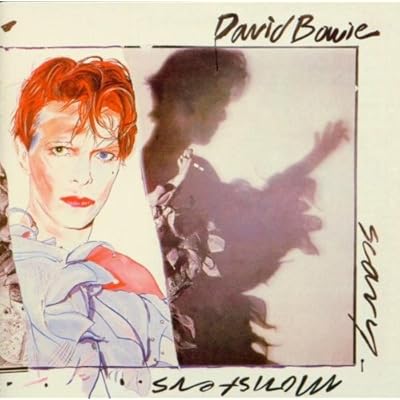
Tracklist (all songs by David Bowie except where otherwise noted):
1 It's No Game, Pt. 1
2 Up the Hill Backwards
3 Scary Monsters (And Super Creeps)
4 Ashes to Ashes
5 Fashion
6 Teenage Wildlife
7 Scream Like a Baby
8 Kingdom Come (Verlaine)
9 Because You're Young
10 It's No Game, Pt. 2
Allmusic review:
David Bowie returned to relatively conventional rock & roll with Scary Monsters, an album that effectively acts as an encapsulation of all his '70s experiments. Reworking glam rock themes with avant-garde synth flourishes, and reversing the process as well, Bowie creates dense but accessible music throughout Scary Monsters. Though it doesn't have the vision of his other classic records, it wasn't designed to break new ground — it was created as the culmination of Bowie's experimental genre-shifting of the '70s. As a result, Scary Monsters is Bowie's last great album. While the music isn't far removed from the post-punk of the early '80s, it does sound fresh, hip, and contemporary, which is something Bowie lost over the course of the '80s.
<object width="480" height="385"><param name="movie" value="http://www.youtube.com/v/L_QE0Ooe9Oo?fs=1&hl=en_US"></param><param name="allowFullScreen" value="true"></param><param name="allowscriptaccess" value="always"></param><embed src="http://www.youtube.com/v/L_QE0Ooe9Oo?fs=1&hl=en_US" type="application/x-shockwave-flash" allowscriptaccess="always" allowfullscreen="true" width="480" height="385"></embed></object>
(The only version of the video I could find on YouTube that allowed embedding)
<object width="640" height="385"><param name="movie" value="http://www.youtube.com/v/5fGPS6-KSFo?fs=1&hl=en_US"></param><param name="allowFullScreen" value="true"></param><param name="allowscriptaccess" value="always"></param><embed src="http://www.youtube.com/v/5fGPS6-KSFo?fs=1&hl=en_US" type="application/x-shockwave-flash" allowscriptaccess="always" allowfullscreen="true" width="640" height="385"></embed></object>
<object width="480" height="385"><param name="movie" value="http://www.youtube.com/v/wCNelxxc1JE?fs=1&hl=en_US"></param><param name="allowFullScreen" value="true"></param><param name="allowscriptaccess" value="always"></param><embed src="http://www.youtube.com/v/wCNelxxc1JE?fs=1&hl=en_US" type="application/x-shockwave-flash" allowscriptaccess="always" allowfullscreen="true" width="480" height="385"></embed></object>
Moving on then...
Scary Monsters (1980)
Tracklist (all songs by David Bowie except where otherwise noted):
1 It's No Game, Pt. 1
2 Up the Hill Backwards
3 Scary Monsters (And Super Creeps)
4 Ashes to Ashes
5 Fashion
6 Teenage Wildlife
7 Scream Like a Baby
8 Kingdom Come (Verlaine)
9 Because You're Young
10 It's No Game, Pt. 2
Allmusic review:
David Bowie returned to relatively conventional rock & roll with Scary Monsters, an album that effectively acts as an encapsulation of all his '70s experiments. Reworking glam rock themes with avant-garde synth flourishes, and reversing the process as well, Bowie creates dense but accessible music throughout Scary Monsters. Though it doesn't have the vision of his other classic records, it wasn't designed to break new ground — it was created as the culmination of Bowie's experimental genre-shifting of the '70s. As a result, Scary Monsters is Bowie's last great album. While the music isn't far removed from the post-punk of the early '80s, it does sound fresh, hip, and contemporary, which is something Bowie lost over the course of the '80s.
<object width="480" height="385"><param name="movie" value="http://www.youtube.com/v/L_QE0Ooe9Oo?fs=1&hl=en_US"></param><param name="allowFullScreen" value="true"></param><param name="allowscriptaccess" value="always"></param><embed src="http://www.youtube.com/v/L_QE0Ooe9Oo?fs=1&hl=en_US" type="application/x-shockwave-flash" allowscriptaccess="always" allowfullscreen="true" width="480" height="385"></embed></object>
(The only version of the video I could find on YouTube that allowed embedding)
<object width="640" height="385"><param name="movie" value="http://www.youtube.com/v/5fGPS6-KSFo?fs=1&hl=en_US"></param><param name="allowFullScreen" value="true"></param><param name="allowscriptaccess" value="always"></param><embed src="http://www.youtube.com/v/5fGPS6-KSFo?fs=1&hl=en_US" type="application/x-shockwave-flash" allowscriptaccess="always" allowfullscreen="true" width="640" height="385"></embed></object>
<object width="480" height="385"><param name="movie" value="http://www.youtube.com/v/wCNelxxc1JE?fs=1&hl=en_US"></param><param name="allowFullScreen" value="true"></param><param name="allowscriptaccess" value="always"></param><embed src="http://www.youtube.com/v/wCNelxxc1JE?fs=1&hl=en_US" type="application/x-shockwave-flash" allowscriptaccess="always" allowfullscreen="true" width="480" height="385"></embed></object>
09-26-10 | 07:56 PM
#112
Banned by request
Re: Album by Album: David Bowie
It's the popular opinion that this is Bowie's last great album, and whether or not you agree with that, it's hard to argue that this album is anything less than spectacular. Bowie took a look back at all he had done throughout the 70's, chewed it up, synthesized it, and spit it back out as something new.
The opener, "It's No Game, Part 1" feels like a belated reaction to punk (or perhaps No-Wave). The guitars screech as Bowie spews out the lyrics, shrieking "Draw the blinds on yesterday/And it's all so much scarier/Put a bullet in my brains/And it makes all the papers" while a harried Japanese woman talks nervously between the verses. "To be insulted by these fascists is so degrading," he sings, before reiterating, "It's no game!" He ends the song with atonal guitar which he tells to shut up. Certainly the most forceful opener in Bowie's catalog.
"Up The Hill Backwards" is a brilliant bit of construction, beginning with a furious bit of guitar and percussion before settling into a more relaxed groove. Bowie, accompanied by a chorus of backing singers, sings mostly nonsense, before the guitar fury ends the track.
The title track, "Scary Monsters (And Super Creeps)," finds Bowie singing in a cockney mode over one of his most threatening-sounding songs. "She asked for my love and I gave her a dangerous mind/Now she's stupid and can't socialize/Well I love the little girl and I'll love her till the day she dies," Bowie sings, showing us a woman falling apart. The track benefits from Tony Visconti's direct and forceful production, which highlights the ringing percussion and Robert Fripp's fret-bending guitar work.
"Ashes To Ashes" is in many ways the ultimate Bowie song. Musically, it sounds like a track that could have been found on Lodger, with jagged guitars, layered synths, and an upfront bass. Lyrically, the song details the fate of Major Tom from Bowie's first UK hit, "Space Oddity," casting the character, already alienated from the world, as a junkie. The song was Bowie's way of wrapping up the 70's, as he sings in the middle eight, "I've never done good things/I've never done bad things/I've never done anything out of the blue," before returning to the refrain, "Ashes to ashes/Funk to funky/We know Major Tom's a junkie/Strung up in heaven's high/Hitting an all-time low." The accompanying video featured Bowie in his pierrot clown make-up, surrounded by potent imagery. The song was a UK #1 single, and to this day is considered not just a Bowie classic, but the video is also considered one of the most influential in the history of the medium.
"Fashion" is another Bowie classic. Bowie sings of strange new dances and fashions. "They're doing it over there/But we don't do it here," he sings. The track is definitely danceable, but Robert Fripp's guitar adds an air of menace. "Fashion" also had an accompanying music video, featuring the band playing without their instruments properly prepared and people advertising a giant pill. Both it and the video to "Ashes To Ashes" are highly regarded.
"Teenage Wildlife," aside from being the inspiration for the name of one of the best Bowie sites on the web (before it was abandoned, that is), is also the longest track on Scary Monsters, clocking in at almost seven minutes. In it, Bowie takes aim at several of the musicians who were following in his footsteps, including Gary Numan. "A broken-nosed mogul are you/One of the new wave boys/Same old thing in brand new drag/Comes sweeping into view/As ugly as a teenage millionaire/Pretending it’s a whiz-kid world/You'll take me aside and say/David what shall I shall I do/They wait for me in the hallway/I'll say don't ask me I don't know any hallways/But they move in numbers and they got me in a corner/I feel like a group of one/Oh no, they can't do this to me/I'm not some piece of teenage wildlife!" The song sounds anthemic, but also highly personal. The song chugs along, not unlike "Heroes," Bowie's other highly personal anthem.
"Scream Like A Baby" was originally written as "I Am A Laser" for The Astronettes on an album that wasn't released until the mid-90's, and recorded around the time of the Diamond Dogs sessions. Reworked for Scary Monsters, the song is claustrophobic and percussion heavy, while a droning synth gives the impression of an alarm of some kind. Bowie sings about a futuristic prison in the past tense, in what he called "future nostalgia."
"Kingdom Come" was the album's only cover, that of a Television song. It fits in pretty well with the rest of the album, and imo, is better than the original version.
"Because You're Young" features Pete Townshend of The Who on guitar. Bowie calls out to the misfits on this one. "Psycho-delicate girl, come out to play/Little metal-faced boy, don't stay away." Bowie laments their lot, "These pieces are broken," he muses, before encouraging them to go out and live anyway. "Because you're young/You'll meet a stranger some night/Because you're young/What could be nicer for you?/But it makes me sad/So I'll dance my life away." Perhaps he was already looking towards the extremely commercial nature he would take three years later with Let's Dance.
"It's No Game, Part 2" finishes thing up with a calmer, more intelligible rendering of the opening track. Bowie adds one final verse here, wrapping up a truly fantastic album.
I don't know if I'd call Scary Monsters Bowie's last great album, but it his last masterpiece, an artful piece of work that still manages to attract wide audiences.
The opener, "It's No Game, Part 1" feels like a belated reaction to punk (or perhaps No-Wave). The guitars screech as Bowie spews out the lyrics, shrieking "Draw the blinds on yesterday/And it's all so much scarier/Put a bullet in my brains/And it makes all the papers" while a harried Japanese woman talks nervously between the verses. "To be insulted by these fascists is so degrading," he sings, before reiterating, "It's no game!" He ends the song with atonal guitar which he tells to shut up. Certainly the most forceful opener in Bowie's catalog.
"Up The Hill Backwards" is a brilliant bit of construction, beginning with a furious bit of guitar and percussion before settling into a more relaxed groove. Bowie, accompanied by a chorus of backing singers, sings mostly nonsense, before the guitar fury ends the track.
The title track, "Scary Monsters (And Super Creeps)," finds Bowie singing in a cockney mode over one of his most threatening-sounding songs. "She asked for my love and I gave her a dangerous mind/Now she's stupid and can't socialize/Well I love the little girl and I'll love her till the day she dies," Bowie sings, showing us a woman falling apart. The track benefits from Tony Visconti's direct and forceful production, which highlights the ringing percussion and Robert Fripp's fret-bending guitar work.
"Ashes To Ashes" is in many ways the ultimate Bowie song. Musically, it sounds like a track that could have been found on Lodger, with jagged guitars, layered synths, and an upfront bass. Lyrically, the song details the fate of Major Tom from Bowie's first UK hit, "Space Oddity," casting the character, already alienated from the world, as a junkie. The song was Bowie's way of wrapping up the 70's, as he sings in the middle eight, "I've never done good things/I've never done bad things/I've never done anything out of the blue," before returning to the refrain, "Ashes to ashes/Funk to funky/We know Major Tom's a junkie/Strung up in heaven's high/Hitting an all-time low." The accompanying video featured Bowie in his pierrot clown make-up, surrounded by potent imagery. The song was a UK #1 single, and to this day is considered not just a Bowie classic, but the video is also considered one of the most influential in the history of the medium.
"Fashion" is another Bowie classic. Bowie sings of strange new dances and fashions. "They're doing it over there/But we don't do it here," he sings. The track is definitely danceable, but Robert Fripp's guitar adds an air of menace. "Fashion" also had an accompanying music video, featuring the band playing without their instruments properly prepared and people advertising a giant pill. Both it and the video to "Ashes To Ashes" are highly regarded.
"Teenage Wildlife," aside from being the inspiration for the name of one of the best Bowie sites on the web (before it was abandoned, that is), is also the longest track on Scary Monsters, clocking in at almost seven minutes. In it, Bowie takes aim at several of the musicians who were following in his footsteps, including Gary Numan. "A broken-nosed mogul are you/One of the new wave boys/Same old thing in brand new drag/Comes sweeping into view/As ugly as a teenage millionaire/Pretending it’s a whiz-kid world/You'll take me aside and say/David what shall I shall I do/They wait for me in the hallway/I'll say don't ask me I don't know any hallways/But they move in numbers and they got me in a corner/I feel like a group of one/Oh no, they can't do this to me/I'm not some piece of teenage wildlife!" The song sounds anthemic, but also highly personal. The song chugs along, not unlike "Heroes," Bowie's other highly personal anthem.
"Scream Like A Baby" was originally written as "I Am A Laser" for The Astronettes on an album that wasn't released until the mid-90's, and recorded around the time of the Diamond Dogs sessions. Reworked for Scary Monsters, the song is claustrophobic and percussion heavy, while a droning synth gives the impression of an alarm of some kind. Bowie sings about a futuristic prison in the past tense, in what he called "future nostalgia."
"Kingdom Come" was the album's only cover, that of a Television song. It fits in pretty well with the rest of the album, and imo, is better than the original version.
"Because You're Young" features Pete Townshend of The Who on guitar. Bowie calls out to the misfits on this one. "Psycho-delicate girl, come out to play/Little metal-faced boy, don't stay away." Bowie laments their lot, "These pieces are broken," he muses, before encouraging them to go out and live anyway. "Because you're young/You'll meet a stranger some night/Because you're young/What could be nicer for you?/But it makes me sad/So I'll dance my life away." Perhaps he was already looking towards the extremely commercial nature he would take three years later with Let's Dance.
"It's No Game, Part 2" finishes thing up with a calmer, more intelligible rendering of the opening track. Bowie adds one final verse here, wrapping up a truly fantastic album.
I don't know if I'd call Scary Monsters Bowie's last great album, but it his last masterpiece, an artful piece of work that still manages to attract wide audiences.
09-26-10 | 08:02 PM
#113
DVD Talk Legend
Re: Album by Album: David Bowie
Definitely not his last great album. He's put out some good ones lately.
Ashes To Ashes is probably my favorite Bowie song. I remember seeing the video when I was a kid, and it kinda scared me.
Ashes To Ashes is probably my favorite Bowie song. I remember seeing the video when I was a kid, and it kinda scared me.
09-27-10 | 12:45 AM
#114
Re: Album by Album: David Bowie
"Fashion" is another Bowie classic. Bowie sings of strange new dances and fashions. "They're doing it over there/But we don't do it here," he sings. The track is definitely danceable, but Robert Fripp's guitar adds an air of menace. "Fashion" also had an accompanying music video, featuring the band playing without their instruments properly prepared and people advertising a giant pill. Both it and the video to "Ashes To Ashes" are highly regarded.
09-27-10 | 10:09 AM
#116
DVD Talk Limited Edition
Re: Album by Album: David Bowie
It's a hard hard call for me between this and Station To Station as my favorite Bowie, but this is definitely Bowie pretty much at his peak. I've got a soft spot for some of the 1980s pop as that was where I first really discovered Bowie, and I think the Outside/Earthling sets are very underrated, but yeah, it's pretty hard for Bowie to top this. It combines the alienness of Ziggy Stardust with the sonic experimentation of the Berlin trilogy and adds a new world-weary angst to the mix. An absolute classic album.
09-27-10 | 01:08 PM
#117
DVD Talk Special Edition
Joined: Oct 2001
Posts: 1,328
Likes: 0
Received 0 Likes
on
0 Posts
From: Los Angeles
Re: Album by Album: David Bowie
Along with Low, my favorite Bowie album and Ashes To Ashes is hands down my favorite Bowie song.
Jumping back to the non-discussion of Lodger. I find it one of my least favorite Bowie albums. Outside of a few songs, I find it hard to think of this as the most accessible of his Berlin Albums. I kind of find Heroes more accessible. I just haven't really warmed to Lodger.
Jumping back to the non-discussion of Lodger. I find it one of my least favorite Bowie albums. Outside of a few songs, I find it hard to think of this as the most accessible of his Berlin Albums. I kind of find Heroes more accessible. I just haven't really warmed to Lodger.
 09-27-10 | 04:41 PM
#119

DVD Talk Hero

 09-27-10 | 04:51 PM
#121
Banned by request
Re: Album by Album: David Bowie
 I was waiting for your comment on that, Numanoid.
This was what Bowie had to say about Numan in 1980:
Originally Posted by David Bowie
Numan? I really don't know. I think what he did - that element of 'Saviour Machine' - type things - I think he encapsulated that whole feeling excellently. He really did a good job on that kind of stereotype, but I think therein lies his own particular confinement. I don't know where he intends going or what he intends doing, but I think he has confined himself terrifically. But that's his problem, isn't it?
What Numan did he did excellently but in repetition, in the same information coming over again and again, once you've heard one piece. It's rather sterile vision of a kleen-machine future again. But that's really so narrow. It's that false idea of hi-tech society and all that which is... doesn't exist. I don't think we're anywhere near that sort of society. It's a enormous myth that's been perpetuated unfortunately, I guess, by readings of what I've done in that rock area at least, and in the consumer area television has an awful lot to answer for with its fabrication of the computer-world myth.
What Numan did he did excellently but in repetition, in the same information coming over again and again, once you've heard one piece. It's rather sterile vision of a kleen-machine future again. But that's really so narrow. It's that false idea of hi-tech society and all that which is... doesn't exist. I don't think we're anywhere near that sort of society. It's a enormous myth that's been perpetuated unfortunately, I guess, by readings of what I've done in that rock area at least, and in the consumer area television has an awful lot to answer for with its fabrication of the computer-world myth.
Last edited by Supermallet; 09-27-10 at 04:56 PM.
09-27-10 | 05:07 PM
#122
DVD Talk Hero
Re: Album by Album: David Bowie
Yeah, Bowie did come around and admit that Numan wrote two of the best songs in British rock history. But I don't begrudge Bowie's remarks at the time. Numan did cop Bowie's stage present just a bit at the very beginning of his career, but Numan was a kid at the time, and one that was very uncomforatable performing live. His Bowie-isms didn't last long, and he certainly proved that his style would last (or rather that he could change his style enough to not be "confined").
09-27-10 | 05:22 PM
#123
Banned by request
Re: Album by Album: David Bowie
And Bowie certainly went through phases of trying out the styles of his immediate influences. Heck, even Ziggy Stardust was derived from a mix of Marc Bolan and the Legendary Stardust Cowboy. The difference is that Bowie was synthesizing multiple influences filtered through his own perception, whereas Numan briefly appeared to be copying Bowie directly. Ultimately Numan obviously found his own voice and image.
09-27-10 | 06:49 PM
#124
DVD Talk Hero
09-27-10 | 07:06 PM
#125
DVD Talk Gold Edition
Joined: Apr 2003
Posts: 2,629
Likes: 0
Received 0 Likes
on
0 Posts
From: Portland, OR
Re: Album by Album: David Bowie
