


Invented dialects in fiction....
 08-10-02 | 12:30 PM
#1

Thread Starter
Mod Emeritus
Invented dialects in fiction....
I found a related list on Usenet here but it does not limit itself to works that actually use an invented language/dialect but includes novels where language/linguistics is a theme or part of the plot. This led me on to an article concerning a book of which I'd not previously heard.
Other books that come to mind when I think of an author playing with language are:
Are these kind of books "special" or "worthy" by virtue of their authors' inventiveness and linguistic hijinks ? Or they simple marginal, exclusive or even pretentiousl ?!
As I mention elsewhere, I have just finished re-reading Jack Womack's "Random Acts of Senseless Violence" which is the penultimate in his (sometimes loosely) connected Ambient series:
1. Ambient (1987)
2. Terraplane (1988)
3. Heathern (1990)
4. Elvissey (1992)
5. Random Acts of Senseless Violence (1993)
6. Going, Going, Gone (2000)
I love his writing and think it certainly does bear re-reading: his take on a collapsing society takes in the casual violence between haves and have-nots - and between those that have little and those that have less.
These books would fit well in a thread about dystopian fiction but I am mentioning them here primarily because they must be included in that set of works where the author challenges the reader with his linguistic shenanigans.
One of the constant features of Womack's series is his depiction of the argot of this alternative world. In the first of the books you hear the mutated and self-mutilated "ambients" talking in an Elizabethan-influenced slang while the professional types have an ultra-clipped phraseology.
In RAoSV, the view of Womack's collapsing society is through the eyes of a pubescent girl in New York as she puts down her thoughts into a diary. Her "nice" family life is slipping as she starts and by the end.... well I have to admit that I was very moved (and depressed) by the time I got to the final page; particularly the final line. And the language in the diary moves from "preppy" almost to street-thug; Dhalgren meets Lord of the Flies....
Other books that come to mind when I think of an author playing with language are:
- A Clockwork Orange - Anthony Burgess
- Riddley Walker - Russell Hoban
- Vurt - Jeff Noon
- Feersum Endjinn - Ian Banks
Are these kind of books "special" or "worthy" by virtue of their authors' inventiveness and linguistic hijinks ? Or they simple marginal, exclusive or even pretentiousl ?!
As I mention elsewhere, I have just finished re-reading Jack Womack's "Random Acts of Senseless Violence" which is the penultimate in his (sometimes loosely) connected Ambient series:
1. Ambient (1987)
2. Terraplane (1988)
3. Heathern (1990)
4. Elvissey (1992)
5. Random Acts of Senseless Violence (1993)
6. Going, Going, Gone (2000)
I love his writing and think it certainly does bear re-reading: his take on a collapsing society takes in the casual violence between haves and have-nots - and between those that have little and those that have less.
These books would fit well in a thread about dystopian fiction but I am mentioning them here primarily because they must be included in that set of works where the author challenges the reader with his linguistic shenanigans.
One of the constant features of Womack's series is his depiction of the argot of this alternative world. In the first of the books you hear the mutated and self-mutilated "ambients" talking in an Elizabethan-influenced slang while the professional types have an ultra-clipped phraseology.
In RAoSV, the view of Womack's collapsing society is through the eyes of a pubescent girl in New York as she puts down her thoughts into a diary. Her "nice" family life is slipping as she starts and by the end.... well I have to admit that I was very moved (and depressed) by the time I got to the final page; particularly the final line. And the language in the diary moves from "preppy" almost to street-thug; Dhalgren meets Lord of the Flies....
 08-11-02 | 08:21 PM
#2
DVD Talk Special Edition
Joined: May 2002
Posts: 1,560
Likes: 0
Received 0 Likes
on
0 Posts
From: Virginia
"My Lolita, all I have are words to play with!"
While Nabokov didn't create a dialect, he did some incredible word plays. I think my favorite was when Humbert Humbert made the connection of "Pharaohic, lilac, phallic."
Joyce would work, mostly for what he did in Finnegans Wake, where he went about combining all those words from different languages (and whatever that 100 letter word on the first page was all about).
Faulkner had some odd style with his writing...even when he wasn't writing in southern vernacular. Quentin's chapter in The Sound and the Fury left me very intrigued but very VERY confused.
While Nabokov didn't create a dialect, he did some incredible word plays. I think my favorite was when Humbert Humbert made the connection of "Pharaohic, lilac, phallic."
Joyce would work, mostly for what he did in Finnegans Wake, where he went about combining all those words from different languages (and whatever that 100 letter word on the first page was all about).
Faulkner had some odd style with his writing...even when he wasn't writing in southern vernacular. Quentin's chapter in The Sound and the Fury left me very intrigued but very VERY confused.
08-12-02 | 12:55 AM
#3

DVD Talk Hero
Speaking of invented dialects in novels, there's Voice of the Fire by Alan Moore (yeah, the comic book writer).
The novel is essentially a series of short stories about a location in England, and each chapter is a story that takes at a certain time period, ranging from 4000 BC to the twentieth century.
From the back cover: "VOICE OF THE FIRE is a dark human history seen from the vantage point of a single place. Linked by a geographical radius of only ten miles, yet seperated in time by a span of some 5000 years, each chapter brings us a different voice from the ashes of the past."
The first chapter, at 4000 BC, is told in the voice of a prehistoric man. It starts out:
A-hind of hill, ways off to sun-set-down, is sky come like as fire, and walk I up in way of this, all hard of breath, where is grass colding on I's feet and wetting they.
There is no grass on high of hill. There is but dirt, all in a round, that hill is as like to a no-hair man, he's head. Stands I, and turn I's face to wind for sniff, and yet is no sniff come for far ways off. I's belly hurts, in middle of I. Belly-air come up in mouth, and lick of it is like to lick of no thing. Dry-up blood lump is come black on knee, and is with itch. Scratch I, where is yet more blood to come.
The book was published in England, without a US edition, and it might be out of print. It's sort of difficult to come by, but it's worth it.
The novel is essentially a series of short stories about a location in England, and each chapter is a story that takes at a certain time period, ranging from 4000 BC to the twentieth century.
From the back cover: "VOICE OF THE FIRE is a dark human history seen from the vantage point of a single place. Linked by a geographical radius of only ten miles, yet seperated in time by a span of some 5000 years, each chapter brings us a different voice from the ashes of the past."
The first chapter, at 4000 BC, is told in the voice of a prehistoric man. It starts out:
A-hind of hill, ways off to sun-set-down, is sky come like as fire, and walk I up in way of this, all hard of breath, where is grass colding on I's feet and wetting they.
There is no grass on high of hill. There is but dirt, all in a round, that hill is as like to a no-hair man, he's head. Stands I, and turn I's face to wind for sniff, and yet is no sniff come for far ways off. I's belly hurts, in middle of I. Belly-air come up in mouth, and lick of it is like to lick of no thing. Dry-up blood lump is come black on knee, and is with itch. Scratch I, where is yet more blood to come.
The book was published in England, without a US edition, and it might be out of print. It's sort of difficult to come by, but it's worth it.
08-12-02 | 10:09 AM
#4
DVD Talk Gold Edition
Joined: Oct 1999
Posts: 2,073
Likes: 0
Received 0 Likes
on
0 Posts
From: New Jersey, where the state motto should be Leave No Tree Standing
What about the languages Tolkien made up for the various races of Elves, Dwarves, Orcs and Men in The Lord of the Rings. Some of it I think was based on Welsh.
 08-30-03 | 08:12 AM
#7
Thread Starter
Mod Emeritus
Wise words, indeed, from Groucho!
I was so taken aback it has taken me a while to respond....
.... but turning to 20th century fiction - & 21st if anyone knows anything relevant - are there any more additions or thoughts on those mentioned already??
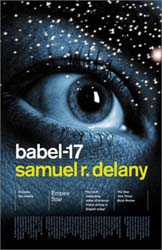

Some years ago I read both of these although Stephenson's novel was by far the more enjoyable, as I recall. The article linked to via the second of the two graphics is quite interesting.
I was so taken aback it has taken me a while to respond....
.... but turning to 20th century fiction - & 21st if anyone knows anything relevant - are there any more additions or thoughts on those mentioned already??
Some years ago I read both of these although Stephenson's novel was by far the more enjoyable, as I recall. The article linked to via the second of the two graphics is quite interesting.
08-30-03 | 12:44 PM
#8
DVD Talk Platinum Edition
Originally posted by Josh-da-man
The book was published in England, without a US edition, and it might be out of print. It's sort of difficult to come by, but it's worth it.
The book was published in England, without a US edition, and it might be out of print. It's sort of difficult to come by, but it's worth it.
Top Shelf is putting this out in Hardcover later this year.
08-31-03 | 10:15 AM
#9
DVD Talk Hero
Originally posted by Groucho
Few people are aware of this, but the entire language of Portuguese was invented by William Shakespeare for his little-known play The Duke of Lisbon.
Few people are aware of this, but the entire language of Portuguese was invented by William Shakespeare for his little-known play The Duke of Lisbon.
